Best Bookshelf Speakers in 2026
Six bookshelf speakers compared — powered pairs with HDMI, Bluetooth and phono inputs, a premium wireless set and a passive pair for receivers — for desks, TVs and vinyl.
- 6 picks
- 5 min read
- Updated Nov 20, 2026
As an Amazon Associate I earn from qualifying purchases. If you buy through a link here we may earn a commission, at no extra cost to you. Details
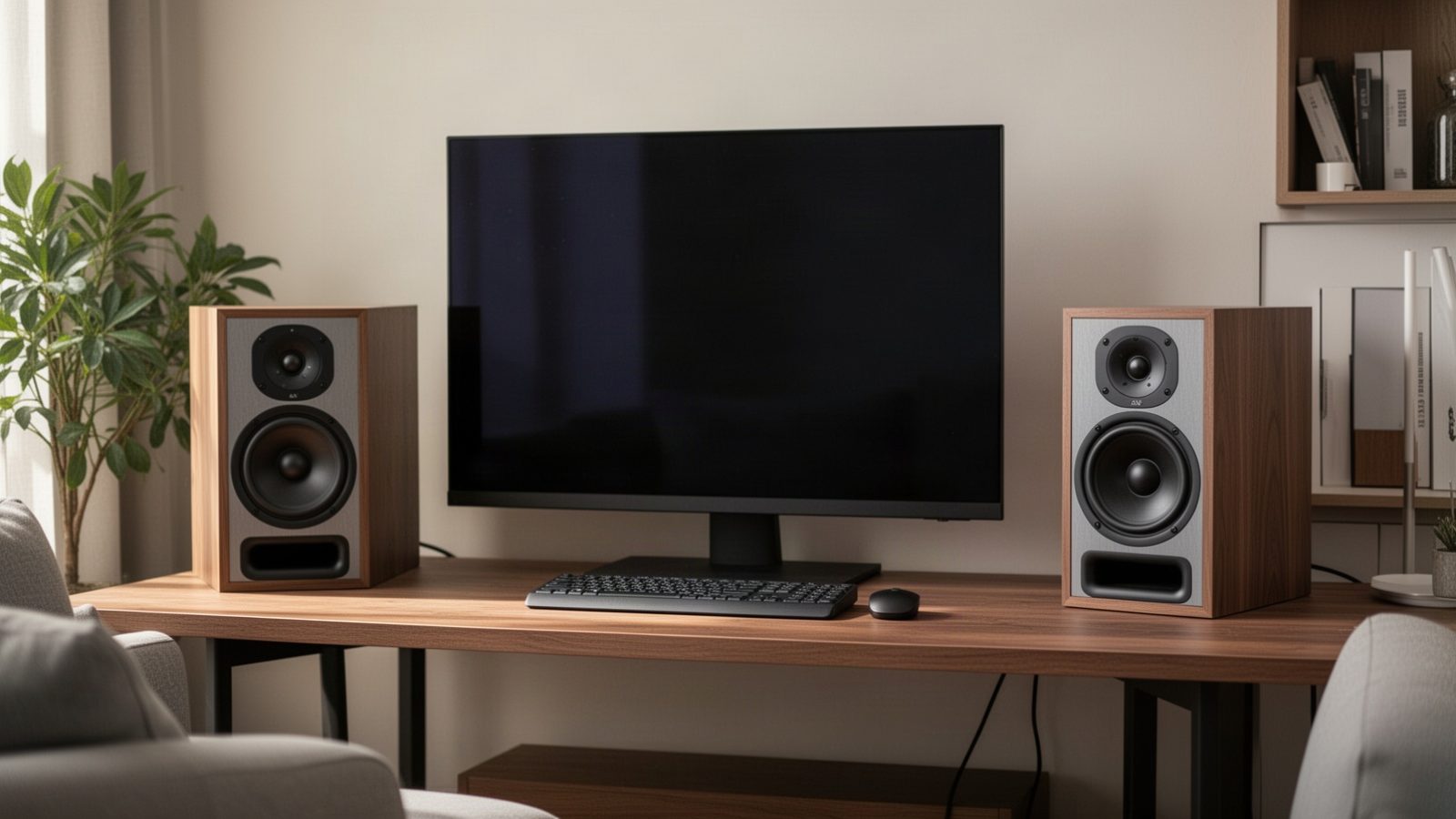
A good pair of bookshelf speakers is one of the best-value upgrades in home audio. Compared with a single smart speaker or a soundbar, a proper stereo pair creates a wider, more realistic soundstage, with instruments and voices placed across the room, and they're small enough for a desk, a media console or a pair of stands.
The first decision is whether you want powered speakers, which have amplifiers built in and connect directly to a TV, turntable, computer or phone, or passive speakers, which need a separate amplifier or AV receiver. After that, it's about size, the inputs you need and how you'll place them. We compared popular bookshelf speakers from Klipsch, KEF, Edifier, Audioengine, Kanto and Polk on type, driver size, inputs, streaming features and room fit, and picked the best for different setups and budgets.
The lineup
 Best overall Klipsch The Fives Powered Speakers
One pair for TV, vinyl and music streaming
9.2 Buy Now on Amazon
 Best premium KEF LSX II Wireless Speakers
Design-conscious listeners who stream music
9.1 Buy Now on Amazon
 Best value Edifier R1280DBs Powered Bookshelf Speakers
Desks, bedrooms and first stereo setups on a budget
8.9 Buy Now on Amazon
 Best for desks Audioengine A2+ Wireless Desktop Speakers
Computer desks and small spaces
8.7 Buy Now on Amazon
 Best for turntables Kanto YU4 Powered Speakers
Vinyl setups without a separate preamp
8.5 Buy Now on Amazon
 Best passive Polk Monitor XT15 Bookshelf Speakers
Pairing with a receiver or stereo amplifier
8.4 Buy Now on Amazon
AI picture
- TypePowered
- Woofer4.5-inch
- InputsHDMI ARC, optical, USB, phono/line RCA, Bluetooth
- Subwoofer outputYes
#1Best overall9.2/10
Klipsch The Fives Powered Speakers
Klipsch
Retro-styled powered speakers with HDMI ARC, a phono input and Bluetooth that can replace a soundbar.
Good for: One pair for TV, vinyl and music streaming
- HDMI ARC lets them replace a soundbar
- Built-in phono preamp for turntables
- Lively, dynamic sound
- Handsome wood-veneer retro styling
- Large for a desk
- No Wi-Fi streaming
- Premium-priced for powered speakers
Klipsch The Fives are the Swiss Army knife of powered speakers. HDMI ARC lets them connect to a TV like a soundbar, with your TV remote controlling volume, while a phono input with a built-in preamp takes a turntable directly. Optical, USB and Bluetooth cover computers, older TVs and phones.
Klipsch's horn-loaded tweeters give them a lively, dynamic sound that suits movies, rock and vocals, and the 4.5-inch woofers fill a small or medium room. A subwoofer output makes adding deeper bass easy.
They're on the large side for a desk, and there's no Wi-Fi streaming, so music from your phone goes over Bluetooth. If you want one stereo pair to handle the TV, a record player and casual listening, few speakers are as versatile.
The short version: The most versatile powered speakers for TV, vinyl and everyday music.
AI picture- TypePowered, wireless
- Woofer4.5-inch Uni-Q (tweeter at center)
- InputsHDMI ARC, optical, USB-C, analog, Bluetooth, Wi-Fi
- StreamingAirPlay 2, Chromecast, Spotify Connect
#2Best premium9.1/10
KEF LSX II Wireless Speakers
KEF
Compact, premium wireless speakers with KEF's Uni-Q drivers, HDMI ARC and every major streaming option.
Good for: Design-conscious listeners who stream music
- Detailed, spacious sound from small cabinets
- Wi-Fi streaming with AirPlay 2 and Chromecast
- HDMI ARC for TV use
- Stylish finishes
- Premium-priced
- Limited deep bass without a subwoofer
- Small size limits volume in large rooms
KEF's LSX II packs a lot of hi-fi engineering into small, stylish cabinets. Each speaker uses KEF's Uni-Q driver, with the tweeter mounted in the center of the woofer, which helps produce a wide, coherent soundstage that stays consistent as you move around the room.
They're built for streaming. Wi-Fi support covers AirPlay 2, Chromecast and Spotify Connect, and the KEF app adds more services and tone adjustments. HDMI ARC, optical, USB-C and analog inputs let them double as TV or computer speakers.
Their size limits deep bass and maximum volume in larger rooms, and they're premium-priced. For a living room, office or bedroom where looks matter and you mainly stream, they're a beautifully executed choice.
The short version: The best premium wireless bookshelf speakers for streaming in style.
AI picture- TypePowered
- Woofer4-inch
- InputsBluetooth, optical, coaxial, two RCA
- Subwoofer outputYes
#3Best value8.9/10
Edifier R1280DBs Powered Bookshelf Speakers
Edifier · Model R1280DBs
Budget-friendly powered speakers with Bluetooth, optical and coaxial inputs and a subwoofer output.
Good for: Desks, bedrooms and first stereo setups on a budget
- Strong sound quality for the price
- Optical and coaxial inputs suit TVs and PCs
- Subwoofer output for adding bass
- Remote control and side-panel tone knobs
- No HDMI ARC
- Plain styling
- Limited bass without a subwoofer
Edifier's R1280 series has been a go-to budget recommendation for years, and the R1280DBs adds the connections most people need. Bluetooth handles phones, optical and coaxial inputs connect to TVs, consoles and computers, and two RCA inputs take a turntable with a preamp or other analog sources.
The sound is balanced and clear for the money, with bass and treble knobs on the side for quick adjustments and a remote for volume. A subwoofer output lets you add more bass later.
There's no HDMI ARC or Wi-Fi streaming, and the styling is simple. For a desk, bedroom or first stereo system on a budget, it's hard to beat.
The short version: The best budget-friendly powered speakers for most people.
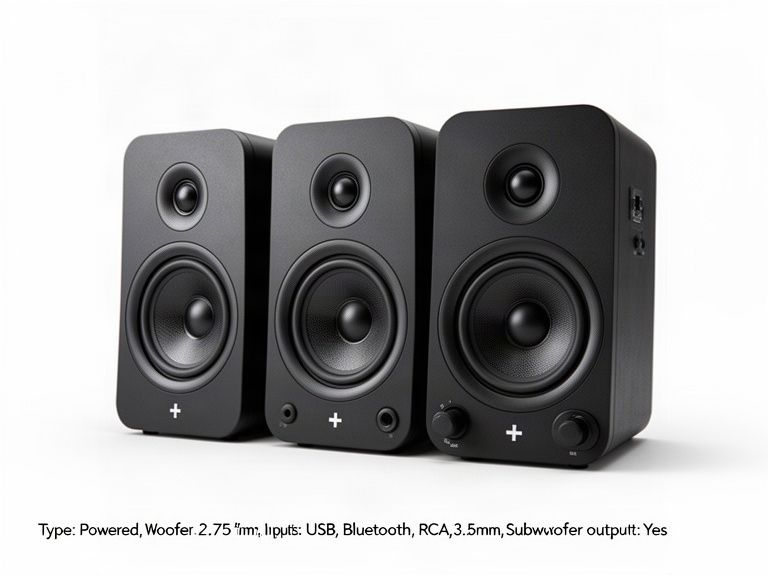
AI picture- TypePowered
- Woofer2.75-inch
- InputsUSB, Bluetooth, RCA, 3.5mm
- Subwoofer outputYes
#4Best for desks8.7/10
Audioengine A2+ Wireless Desktop Speakers
Audioengine
Compact, well-built powered speakers with USB, Bluetooth and analog inputs sized for a desk.
Good for: Computer desks and small spaces
- Small enough for any desk
- USB input with a built-in digital-to-analog converter
- Clear, detailed sound at desk distances
- Solid build quality
- Not room-filling
- Limited bass from small drivers
- No optical or HDMI input
The Audioengine A2+ Wireless is sized and voiced for close listening. The compact cabinets fit beside a monitor without crowding the desk, and at arm's length they produce clear, detailed stereo sound that's a big step up from laptop or monitor speakers.
A USB input with a built-in converter connects directly to a computer, Bluetooth handles phones, and analog inputs take other sources. A subwoofer output helps if you want more low end.
The small drivers can't fill a living room or deliver deep bass on their own, and there's no optical or HDMI input for TVs. As premium computer speakers, though, they're excellent.
The short version: Excellent compact speakers for a computer desk.
AI picture- TypePowered
- Woofer4-inch
- InputsPhono/line RCA, optical, 3.5mm, Bluetooth
- Subwoofer outputYes
#5Best for turntables8.5/10
Kanto YU4 Powered Speakers
Kanto · Model YU4
Powered speakers with a built-in phono preamp, Bluetooth and optical input, available in several colors.
Good for: Vinyl setups without a separate preamp
- Built-in phono preamp for direct turntable connection
- Optical input for TVs
- Remote control included
- Available in multiple colors
- No HDMI ARC
- Bass is moderate without a subwoofer
- No Wi-Fi streaming
Kanto's YU4 is a natural partner for a record player. Its built-in phono preamp lets you connect a turntable directly to the speakers, so a complete vinyl setup is just two pieces. Optical and 3.5mm inputs cover a TV or computer, and Bluetooth handles phones.
The 4-inch woofers produce a warm, full sound for their size, and a subwoofer output is there if you want more bass. A remote control and a choice of colors make them easy to fit into a living room or bedroom.
There's no HDMI ARC or Wi-Fi, so they're less flexible for TV use than Klipsch The Fives. For a simple, attractive vinyl system, they're a strong choice.
The short version: The easiest way to build a simple, stylish vinyl setup.
AI picture- TypePassive (needs an amplifier or receiver)
- Woofer5.25-inch
- InputsSpeaker wire terminals
- UseStereo or surround with a receiver
#6Best passive8.4/10
Polk Monitor XT15 Bookshelf Speakers
Polk Audio · Model Monitor XT15
Budget-friendly passive bookshelf speakers that suit stereo systems and surround setups with an AV receiver.
Good for: Pairing with a receiver or stereo amplifier
- Very budget-friendly passive pair
- Larger woofer than most powered rivals
- Works as fronts or surrounds in a home theater
- Easy to match with Polk centers and subwoofers
- Needs a separate amplifier or receiver
- Less refined than pricier passive speakers
- Rear port needs space from the wall
If you already own a stereo amplifier or AV receiver, passive speakers are the more flexible and often more affordable route. Polk's Monitor XT15 is a budget-friendly pair with a 5.25-inch woofer, giving more bass extension than many small powered speakers.
They work well as a stereo pair for music or as front or surround speakers in a home theater, and matching Polk center channels and subwoofers make building a full system straightforward.
You'll need an amplifier or receiver, which adds cost if you don't have one, and the rear port means they sound best with some space behind them. As an affordable passive starting point, they're very good value.
The short version: A great-value passive pair for receiver-based stereo or surround systems.
Compare at a glance
| Pick | Type | Woofer | Inputs | Subwoofer output | Score |
|---|---|---|---|---|---|
| #1 Klipsch The Fives Powered Speakers | Powered | 4.5-inch | HDMI ARC, optical, USB, phono/line RCA, Bluetooth | Yes | 9.2 |
| #2 KEF LSX II Wireless Speakers | Powered, wireless | 4.5-inch Uni-Q (tweeter at center) | HDMI ARC, optical, USB-C, analog, Bluetooth, Wi-Fi | — | 9.1 |
| #3 Edifier R1280DBs Powered Bookshelf Speakers | Powered | 4-inch | Bluetooth, optical, coaxial, two RCA | Yes | 8.9 |
| #4 Audioengine A2+ Wireless Desktop Speakers | Powered | 2.75-inch | USB, Bluetooth, RCA, 3.5mm | Yes | 8.7 |
| #5 Kanto YU4 Powered Speakers | Powered | 4-inch | Phono/line RCA, optical, 3.5mm, Bluetooth | Yes | 8.5 |
| #6 Polk Monitor XT15 Bookshelf Speakers | Passive (needs an amplifier or receiver) | 5.25-inch | Speaker wire terminals | — | 8.4 |
Specs come from manufacturer listings when we wrote this guide and can change between production runs.
Buying tips
Powered or passive?
Powered (active) speakers have built-in amplifiers, so you plug them into the wall and connect your source directly. Many add Bluetooth, optical, USB or even HDMI ARC inputs. They're the simplest choice for desks, TVs and turntables, and the amplifier is matched to the drivers.
Passive speakers need an external amplifier or AV receiver. They give you more flexibility to upgrade components over time and are the natural choice if you already own a receiver or plan a surround system.
A quick way to decide: for a computer desk, choose small powered speakers with USB; for a TV, look for HDMI ARC or optical; for a record player, look for a phono preamp; and if you own a receiver or want surround sound later, go passive.
Size and placement
Larger woofers generally produce deeper bass, but room placement matters as much as size:
- Put the tweeters at roughly ear height, on stands or a desk, rather than low on a shelf.
- Space the pair a few feet apart and angle them slightly toward your listening position for a focused stereo image.
- Leave some space behind speakers with rear bass ports; pushing them against a wall boosts bass and can make it boomy. Foam port plugs, when supplied, help in tight spots.
- Isolation pads or stands reduce vibrations transferring into furniture.
Connections to look for
- HDMI ARC: lets speakers replace a soundbar, with TV remote volume control.
- Phono preamp: lets you plug a turntable in directly without a separate preamp.
- Optical and USB: useful for TVs and computers.
- Subwoofer output: makes adding a subwoofer simple.
- Wi-Fi streaming (AirPlay, Chromecast, Spotify Connect): better quality and range than Bluetooth and easier multiroom use.
Should you add a subwoofer?
Small bookshelf speakers can't reproduce the deepest bass. For movies, electronic music and hip-hop, a compact subwoofer fills in the low end and lets the speakers sound cleaner at higher volumes. Choose speakers with a subwoofer output, or connect both to a receiver.
What to skip and care tips
Ignore peak wattage claims; they say little about real-world loudness or quality. Don't overspend on exotic cables — standard, properly sized speaker wire works fine. Keep speakers away from direct sunlight and heat, dust them with a dry cloth and avoid pressing on the drivers. Turn the volume down before switching sources to protect both the speakers and your ears.
FAQ
QDo bookshelf speakers need an amplifier?
Passive bookshelf speakers do; they connect to an amplifier or AV receiver with speaker wire. Powered speakers have amplifiers built in and connect directly to your sources.
QCan I actually put them on a bookshelf?
You can, but they usually sound better on stands or a desk at ear height, away from enclosed shelves that can make bass boomy. If they must go on a shelf, pull them to the front edge.
QCan bookshelf speakers replace a soundbar?
Yes, especially powered models with HDMI ARC or optical inputs. A stereo pair often sounds better for music than a soundbar, though it won't create surround or Atmos effects.
QCan I connect a turntable to bookshelf speakers?
Yes. Choose powered speakers with a built-in phono preamp, a turntable with a built-in preamp, or add a separate phono preamp between the two.
QDo I need a subwoofer with bookshelf speakers?
Not necessarily for everyday music, but a subwoofer adds deep bass for movies and bass-heavy music. Speakers with a subwoofer output make adding one easy.
How we picked
We compared manufacturer specifications for popular powered and passive bookshelf speakers — driver sizes, amplification, inputs, streaming support, subwoofer outputs and dimensions — and weighed how each suits desks, TV setups, turntables and receiver-based systems. Our picks and scores are based on this research — we have not tested these products hands-on. Brands cannot pay to be included. Read our full method.
In the same aisle
More bookshelf speakers to browse
A random pull from our product catalog, not ranked or reviewed.