Best Classical Guitars in 2026
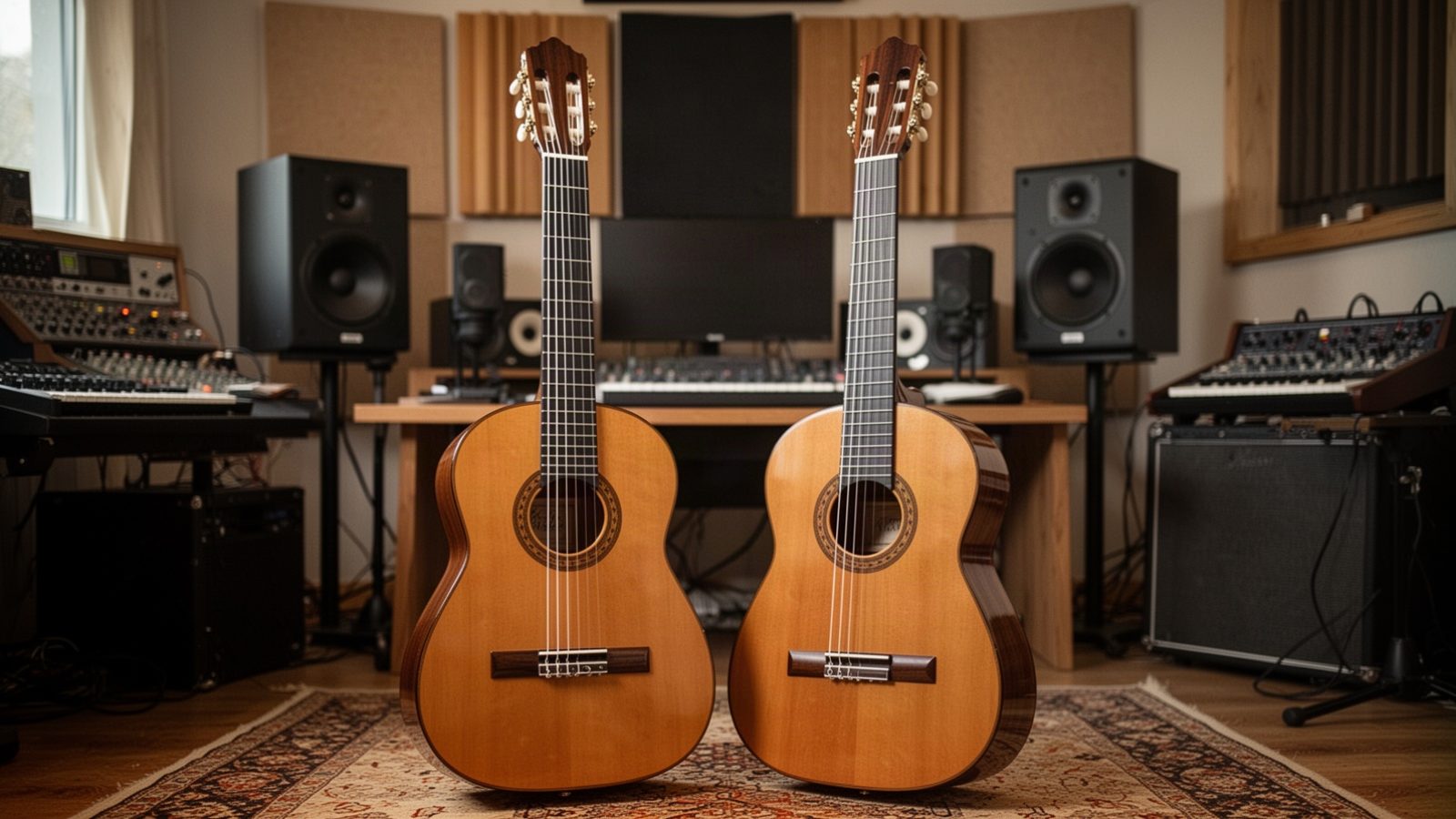
Five nylon-string guitars from Cordoba and Yamaha — a solid cedar-top all-rounder, budget student models, smaller sizes for kids and a slim-neck acoustic-electric crossover.
- 5 picks
- 5 min read
- Updated Nov 20, 2026
As an Amazon Associate I earn from qualifying purchases. If you buy through a link here we may earn a commission, at no extra cost to you. Details
Classical guitars use nylon strings, which are softer on the fingertips and lower in tension than steel. That makes them a common first instrument for children and school programs, and the natural choice for classical, flamenco, bossa nova and folk fingerpicking. Their warm, rounded tone is different from a steel-string acoustic, and the wide, flat neck encourages good hand position from the start.
As with steel-string guitars, the biggest quality jump comes from a solid top, followed by a good setup. Size matters too: younger players need a 1/2 or 3/4 guitar, while players coming from steel strings may prefer a narrower crossover neck. We compared long-running models from Cordoba and Yamaha — two brands that dominate student classical guitars — and picked the best option for different players and budgets.
The lineup
 Best overall Cordoba C5 Solid Cedar-Top Classical Guitar
Adult beginners and students who want a solid-top classical
9.2 Buy Now on Amazon
 Best crossover Cordoba Fusion 5 Acoustic-Electric Classical
Steel-string and electric players adding nylon-string sounds
8.9 Buy Now on Amazon
 Best step-up student model Yamaha CG102 Classical Guitar
Students who want a better-finished Yamaha than the C40
8.6 Buy Now on Amazon
 Best budget Yamaha C40II Classical Guitar
First-time players and school programs on a budget
8.3 Buy Now on Amazon
 Best for kids Cordoba Protégé C1 Classical Guitar
Children who need a 1/2 or 3/4 size guitar
8.1 Buy Now on Amazon
AI picture
- TopSolid Canadian cedar
- Back & sidesMahogany (laminated)
- Scale length25.6 inches (650 mm)
- Nut widthAbout 2 inches (52 mm)
#1Best overall9.2/10
Cordoba C5 Solid Cedar-Top Classical Guitar
Cordoba · Model C5
A full-size classical with a solid Canadian cedar top, a long-standing favorite among teachers.
Good for: Adult beginners and students who want a solid-top classical
- Solid cedar top gives a warm, responsive sound
- Traditional dimensions suit classical lessons
- Known for consistent build quality
- Light build that is comfortable for long practice sessions
- Wide traditional neck feels unfamiliar to steel-string players
- Cedar tops dent and scratch easily
- No pickup on this model
The Cordoba C5 is one of the most frequently recommended first classical guitars, and the solid Canadian cedar top is the main reason. Cedar responds quickly to a light touch and has a warm, immediate tone, so beginners get a rich sound without having to dig in. The back and sides are laminated mahogany, which keeps the guitar sturdy and budget-friendly.
The C5 follows traditional classical dimensions — a 650 mm scale and a wide nut of about 2 inches — so it is a good fit for anyone taking classical lessons, where teachers expect standard string spacing. Owners often point out the quality of the finish and the factory setup for the level.
Those traditional dimensions are also the main caveat: players coming from steel-string or electric guitars may find the wide, flat neck awkward. Cedar is also soft, so the top marks easily. If you are learning nylon-string guitar properly, though, this is the model to start with.
The short version: The best all-round classical for learners: a solid cedar top and traditional feel at a sensible level.
AI picture- TopSolid spruce
- Back & sidesMahogany
- Scale length25.6 inches (650 mm)
- Nut widthAbout 1.9 inches (48 mm)
- ElectronicsFishman pickup and preamp with tuner
#2Best crossover8.9/10
Cordoba Fusion 5 Acoustic-Electric Classical
Cordoba · Model Fusion 5
A solid spruce-top nylon-string with a narrower neck, a cutaway and Fishman electronics for the stage.
Good for: Steel-string and electric players adding nylon-string sounds
- Narrower nut feels familiar to steel-string players
- Cutaway opens up the upper frets
- Built-in Fishman electronics and tuner
- Solid spruce top
- Narrow neck is less suited to formal classical lessons
- Mid-priced compared with student models
- Preamp needs a battery, so carry a spare
The Fusion 5 is built for players who want a nylon-string sound without relearning their left hand. Its nut is about 48 mm wide — noticeably narrower than a traditional classical — and the fingerboard is slightly radiused, so chord shapes feel closer to those on a steel-string acoustic. A cutaway gives access to higher frets, and Fishman electronics with a built-in tuner make it ready for the stage.
The top is solid spruce, with mahogany back and sides and the standard 650 mm scale, so it keeps the classical guitar’s string length while changing the neck feel. That combination is popular with worship players, singer-songwriters and electric guitarists who need nylon-string tones for a few songs.
For a student starting formal classical lessons, the narrower spacing is a drawback: classical technique assumes the traditional wide neck. It is also mid-priced. As a crossover instrument, though, it is one of the best-known options.
The short version: The easiest nylon-string guitar for steel-string players to pick up and plug in.
AI picture- TopSpruce
- Back & sidesNato
- Scale length25.6 inches (650 mm)
- Nut widthAbout 2 inches (52 mm)
#3Best step-up student model8.6/10
Yamaha CG102 Classical Guitar
Yamaha · Model CG102
A full-size, gloss-finished Yamaha classical with a spruce top, nato back and sides and traditional dimensions.
Good for: Students who want a better-finished Yamaha than the C40
- Yamaha’s consistent build quality
- Traditional dimensions for classical lessons
- Gloss finish looks and feels more refined than budget models
- Bright, clear spruce tone
- Not a solid top, so less rich than the Cordoba C5
- Wide neck can feel unfamiliar
- No pickup on this model
Yamaha has supplied student classical guitars to schools for decades, and the CG102 sits a step above the ubiquitous C40. It keeps traditional classical dimensions — a 650 mm scale and a nut of about 2 inches — and adds a gloss finish and a more refined build, with a spruce top and nato back and sides.
The appeal is consistency. Teachers like Yamaha student guitars because they tend to arrive playable and stay stable, and owners often describe the CG102 as a well-made, dependable instrument with a clear, bright voice that suits beginner repertoire.
The comparison with the Cordoba C5 is the key decision. The C5’s solid cedar top should sound richer and more responsive on paper, while the CG102 offers Yamaha’s reliability and a brighter spruce tone. If you prefer a traditional gloss-finished student guitar from a brand many schools use, the CG102 is a strong choice.
The short version: A dependable, well-finished student classical from the brand schools trust.
AI picture- TopSpruce (laminated)
- Back & sidesMeranti
- Scale length25.6 inches (650 mm)
#4Best budget8.3/10
Yamaha C40II Classical Guitar
Yamaha · Model C40II
Yamaha’s best-known entry-level classical: a simple, durable full-size guitar for learning the basics.
Good for: First-time players and school programs on a budget
- Very affordable from an established maker
- Durable laminate build suits classrooms and kids
- Standard full-size dimensions
- Widely available in bundles with a bag and tuner
- Laminate top sounds plainer than solid-top picks
- Basic tuners
- Factory strings are often replaced early
The Yamaha C40 has been a default school and starter classical guitar for years, and the current C40II continues the formula: a full-size nylon-string guitar with a laminated spruce top, meranti back and sides and standard 650 mm scale.
Its strengths are durability and price. A laminate top shrugs off knocks and changes in humidity better than solid wood, which matters for an instrument that will travel in a school bag or sit in a bedroom. Yamaha’s quality control also means it tends to arrive in reasonable shape.
The sound is the trade-off. A laminate top is less resonant, so the C40II sounds plainer and quieter than the Cordoba C5 on paper. Many owners recommend replacing the factory strings with a better set early on, which is an easy, affordable improvement. As a budget-friendly way to start, it does the job well.
The short version: An affordable, tough starter classical — upgrade the strings and it will serve a student well.
AI picture- TopSpruce (laminated)
- Back & sidesMahogany (laminated)
- Scale lengthVaries by size (650 mm full size)
- SizesFull size and smaller student sizes
#5Best for kids8.1/10
Cordoba Protégé C1 Classical Guitar
Cordoba · Model C1
Cordoba’s entry-level student classical, offered in smaller sizes as well as full size.
Good for: Children who need a 1/2 or 3/4 size guitar
- Available in smaller sizes for young players
- Durable laminate construction
- Cordoba’s student-focused setup
- Lightweight and easy for kids to hold
- Laminate top limits tone
- Kids will need a larger size as they grow
- Basic tuners and hardware
The Protégé C1 is Cordoba’s entry-level student classical, and its main advantage is size choice. It comes in smaller student sizes as well as full size, so younger children can start on a guitar they can actually reach around and fret comfortably — the single most important factor in whether a young player sticks with it.
Construction is all-laminate, with a spruce top and mahogany back and sides. That keeps it light and tough, which suits kids who will bump the guitar on doorframes and leave it out of its case. On paper, the sound is simpler than a solid-top guitar, but at this stage playability and durability matter more.
The obvious drawback is that children grow: a 1/2-size guitar may only last a couple of years before a 3/4 or full size is needed. Check the size guide on the listing against your child’s height and arm length before ordering.
The short version: A light, tough classical in kid-friendly sizes — the right first guitar for young beginners.
Compare at a glance
| Pick | Top | Back & sides | Scale length | Nut width | Score |
|---|---|---|---|---|---|
| #1 Cordoba C5 Solid Cedar-Top Classical Guitar | Solid Canadian cedar | Mahogany (laminated) | 25.6 inches (650 mm) | About 2 inches (52 mm) | 9.2 |
| #2 Cordoba Fusion 5 Acoustic-Electric Classical | Solid spruce | Mahogany | 25.6 inches (650 mm) | About 1.9 inches (48 mm) | 8.9 |
| #3 Yamaha CG102 Classical Guitar | Spruce | Nato | 25.6 inches (650 mm) | About 2 inches (52 mm) | 8.6 |
| #4 Yamaha C40II Classical Guitar | Spruce (laminated) | Meranti | 25.6 inches (650 mm) | — | 8.3 |
| #5 Cordoba Protégé C1 Classical Guitar | Spruce (laminated) | Mahogany (laminated) | Varies by size (650 mm full size) | — | 8.1 |
Specs come from manufacturer listings when we wrote this guide and can change between production runs.
Buying tips
Solid top or laminate?
A solid top — usually cedar or spruce — vibrates more freely and gives a richer, more responsive sound than a laminate top. Cedar sounds warm and immediate and responds well to a light touch; spruce is brighter and more focused, and opens up over time. Laminate tops are more durable and less sensitive to humidity, which is why they are common on the most budget-friendly student guitars.
Choosing the right size
Classical guitars come in fractional sizes for children. These are rough guides — comfort and arm reach matter more than age:
- 1/2 size: about ages 5–8.
- 3/4 size: about ages 8–11.
- Full size (650 mm scale): most players aged 12 and up.
A child on a guitar that is too large will struggle to reach chords and may give up, so err on the smaller side if you are between sizes.
Neck width: traditional or crossover?
Traditional classical necks are wide — around 2 inches (52 mm) at the nut — with a flat fingerboard. That spacing suits classical technique but can feel like a plank to steel-string or electric players. Crossover models use a narrower nut and a slightly curved fingerboard, often with a cutaway and pickup, which makes the switch easier.
Features worth paying for
- A solid top for better sound.
- A good setup, especially lower string height at the nut for easier first-position chords.
- Electronics only if you will perform or record directly.
Skip bundles packed with low-quality accessories. A tuner, a footstool or guitar support, and a gig bag are the useful extras.
Strings and care
New nylon strings stretch a lot and need frequent retuning for the first week, which is normal. Tie them carefully at the bridge, and change them every few months or when they sound dull. Strings come in different tensions: normal tension suits most players, low tension is a little kinder to beginner fingertips, and high tension projects more but feels stiffer. Change one string at a time so the saddle stays seated. Nylon-string guitars are lightly built, so protect solid-top models from dry air with a humidifier in winter, and never leave the guitar in a hot car.
FAQ
QCan I put steel strings on a classical guitar?
No. Classical guitars are built for the much lower tension of nylon strings. Steel strings can damage the bridge, top and neck. If you want a steel-string sound, buy a steel-string acoustic instead.
QIs a classical guitar good for beginners who want to play pop or folk?
It works well for learning chords and fingerpicking, and nylon strings are gentler on fingertips. The wide neck takes some getting used to, and the sound is mellower than a steel-string guitar. A crossover model with a narrower neck is a good compromise.
QWhat size classical guitar does my child need?
As a rough guide, 1/2 size suits about ages 5–8, 3/4 size about ages 8–11, and full size most players 12 and up. Height and arm length matter more than age, so check that your child can reach the first fret comfortably.
QWhy do my new nylon strings keep going out of tune?
Nylon strings stretch significantly for the first several days. Retune often, and gently pull each string away from the fingerboard to speed up stretching. They settle down after about a week of regular playing.
QCedar or spruce top — which is better?
Neither is better. Cedar tends to sound warmer and responds well to a light touch, while spruce is brighter and more focused. Choose based on the sound you prefer.
How we picked
We compared manufacturer specifications — top construction, back and sides, scale length, nut width, sizes offered and electronics — for long-running nylon-string guitars that are consistently available online, and weighed how guitar teachers and owners describe their sound and playability. Our picks and scores are based on this research — we have not tested these products hands-on. Brands cannot pay to be included. Read our full method.
In the same aisle
More classical guitars to browse
A random pull from our product catalog, not ranked or reviewed.