Best Large-Diaphragm Condenser Microphones in 2026
Five respected large-diaphragm condenser mics compared for vocals, voiceover and acoustic guitar, from affordable first mics to a premium German classic.
- 5 picks
- 5 min read
- Updated Nov 20, 2026
As an Amazon Associate I earn from qualifying purchases. If you buy through a link here we may earn a commission, at no extra cost to you. Details
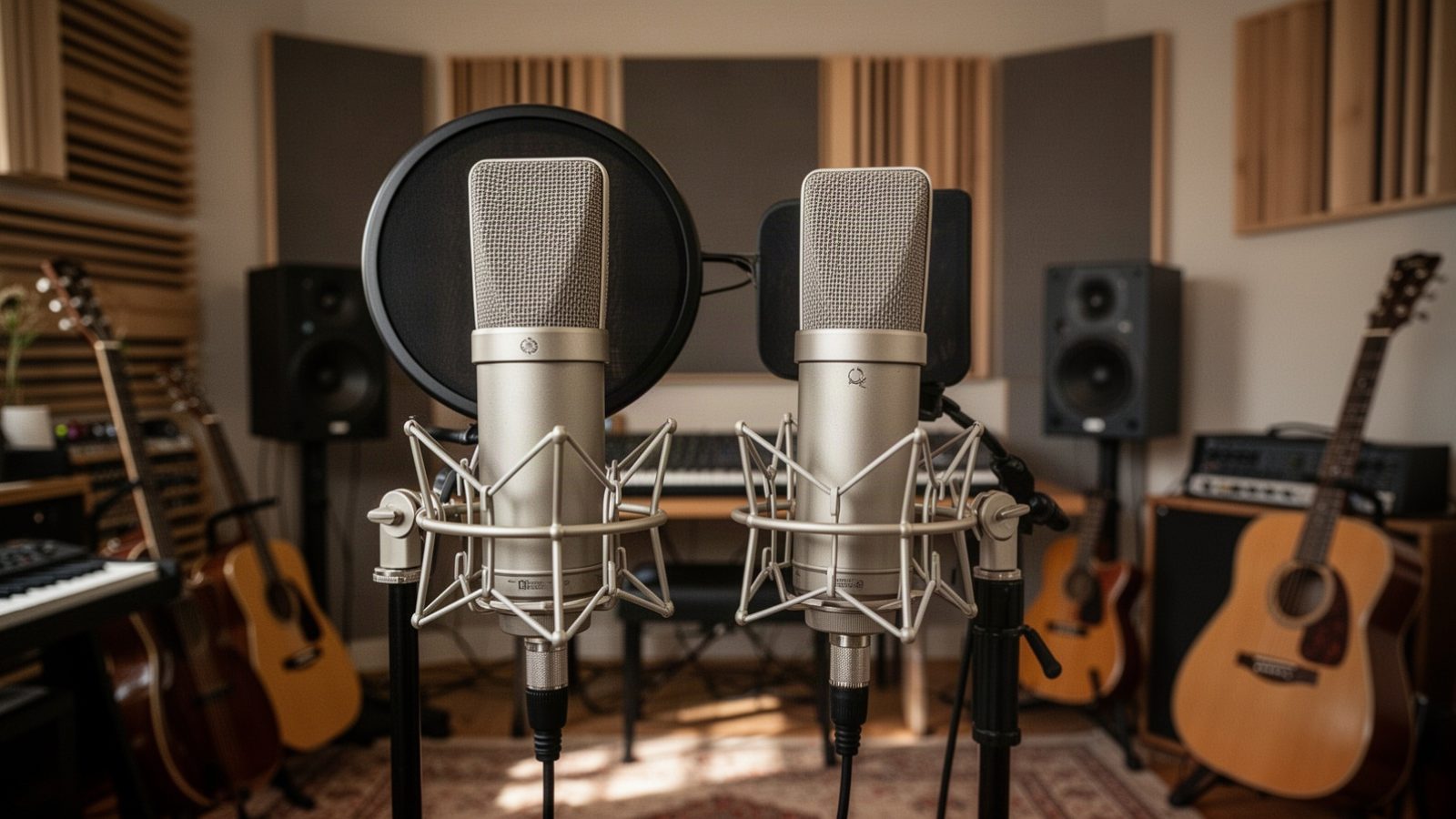
The large-diaphragm condenser is the classic studio vocal microphone, the kind you see hanging in a shock mount behind a pop filter. A thin, sensitive diaphragm about an inch across captures detail, breath and air that stage dynamics miss, which is why these mics are the default choice for recorded vocals, voiceover, acoustic guitar and piano.
That sensitivity has a cost. Condensers hear the room as clearly as the singer, so they sound best in a quiet space with some acoustic treatment, and they need 48-volt phantom power from an audio interface or mixer. The good news is that excellent large-diaphragm condensers are now affordable, and the step up to premium models brings smoother highs and lower noise rather than a night-and-day change. We compared the most respected large-diaphragm condensers sold in the US for home and project studios and picked the best for different voices, rooms and budgets.
The lineup
 Best overall RØDE NT1 5th Generation
Home studios that want one quiet, flexible vocal mic
9.2 Buy Now on Amazon
 Best mid-range upgrade Audio-Technica AT4040
Vocals, acoustic guitar and versatile studio use
8.9 Buy Now on Amazon
 Best for loud sources AKG C214
Powerful singers, guitar amps and drum overheads
8.7 Buy Now on Amazon
AI picture
- Polar patternCardioid
- Pad and filterNone
- ConnectionXLR and USB-C
- In the boxShock mount and pop filter
#1Best overall9.2/10
RØDE NT1 5th Generation
RØDE · Model NT1 5th Gen
A very low-noise 1-inch condenser that connects over XLR or USB-C, with a shock mount and pop filter in the box.
Good for: Home studios that want one quiet, flexible vocal mic
- Very low self-noise for quiet, detailed recordings
- XLR and USB-C connections in one mic
- 32-bit float recording over USB helps prevent clipping
- Shock mount and pop filter included
- No pad or high-pass filter switches
- Sensitive enough to capture room noise
The RØDE NT1 has been a home-studio favorite for years, largely because it is exceptionally quiet: its low self-noise means soft vocals and spoken word come through without background hiss. The 5th Generation keeps the classic 1-inch cardioid capsule and adds a significant twist, a built-in digital connection.
Plug it into an audio interface with an XLR cable, and it works like any studio condenser. Plug it straight into a computer with USB-C, and it records in 32-bit float, a format designed to make clipping practically impossible to ruin a take. That makes it equally useful as a first studio mic and as a long-term upgrade.
RØDE includes a shock mount and pop filter, which saves buying them separately. The trade-offs are the lack of pad or filter switches, which more traditional studio mics offer, and the sensitivity that makes room treatment important.
The short version: The most flexible all-round studio condenser for home recording.
 AI picture
- Polar patternCardioid
- Pad and filterNone
- ConnectionXLR
- In the boxStand mount
- Max SPL144 dB
#2Best premium9.1/10
Neumann TLM 102
Neumann · Model TLM 102
A compact large-diaphragm condenser from one of the most famous names in studio microphones.
Good for: Serious vocalists and voiceover artists
- Neumann’s renowned sound in a compact body
- Smooth presence boost flatters many voices
- Handles very loud sources
- Excellent build quality
- Premium-priced
- Shock mount sold separately
- No pad or filter switches
Neumann makes some of the most famous studio microphones ever built, and the TLM 102 is its most accessible large-diaphragm model. It is noticeably smaller than classic Neumanns, but it carries the company’s reputation for smooth, polished vocals.
Its sound includes a gentle presence lift above the midrange that helps voices sit forward in a mix without harshness, which makes it popular for vocals, voiceover and narration. Neumann rates its maximum sound pressure level at 144 dB, so it can also handle guitar amps and drums.
The trade-offs are cost and accessories. It ships with a simple stand mount, so a shock mount is an extra purchase, and there are no pad or filter switches. For a singer or voice artist who wants a step into premium territory, it is a well-proven choice that holds its value.
The short version: An accessible way into Neumann’s premium studio sound.
AI picture- Polar patternCardioid
- Pad and filter-10 dB pad, 80 Hz high-pass
- ConnectionXLR
- In the boxShock mount
#3Best mid-range upgrade8.9/10
Audio-Technica AT4040
Audio-Technica · Model AT4040
A smooth, neutral large-diaphragm condenser with a pad, high-pass filter and shock mount.
Good for: Vocals, acoustic guitar and versatile studio use
- Smooth, neutral sound suits many voices and instruments
- Pad and high-pass filter for flexibility
- Shock mount included
- Solid, studio-grade build
- Less character than some vintage-style mics
- Large and heavy on a desk arm
The AT4040 is a workhorse that shows up in many professional and project studios. Its sound is smooth and fairly neutral, without a strong bright lift, which makes it flattering on a wide range of voices and equally useful on acoustic guitar, piano and guitar amps.
It includes the practical switches that more budget mics leave out: a -10 dB pad for loud sources and an 80 Hz high-pass filter to clean up low rumble. Audio-Technica also includes a shock mount in the box.
Its neutrality is both strength and limit. If you want a mic with a strong, recognizable character, it may feel a little polite. It is also large and heavy, so make sure your stand or boom arm can carry it. For a versatile second microphone or a step up from an entry-level condenser, it is a dependable choice.
The short version: A versatile, smooth-sounding upgrade that handles vocals and instruments equally well.
AI picture- Polar patternCardioid
- Pad and filter-20 dB pad, bass-cut filter
- ConnectionXLR
- In the boxShock mount and case
#4Best for loud sources8.7/10
AKG C214
AKG · Model C214
A large-diaphragm condenser based on AKG’s famous C414 capsule, with a -20 dB pad and bass cut.
Good for: Powerful singers, guitar amps and drum overheads
- Capsule design derived from the classic C414
- -20 dB pad handles very loud sources
- Includes shock mount, windscreen and case
- Rugged build
- Bright top end can be sharp on sibilant voices
- Single pattern only
The AKG C214 borrows its capsule design from the legendary C414, one of the most widely used studio microphones, and offers it in a simpler single-pattern body. The result is a detailed, slightly bright condenser that is known for handling loud sources with ease.
A -20 dB pad and a bass-cut filter make it flexible: it can capture a powerful rock vocal, a guitar cabinet or a drum kit from overhead without overloading. AKG includes a shock mount, windscreen and carry case.
The bright top end is the main consideration. It adds clarity and air to many sources, but singers with sharp or sibilant voices may need a de-esser or a smoother mic. It also offers only the cardioid pattern, unlike the multi-pattern C414. For studios that record loud vocals and instruments, it is a versatile and rugged choice.
The short version: A rugged, detailed condenser that thrives on loud singers and instruments.
 AI picture
- Polar patternCardioid
- Pad and filter-10 dB pad, 80 Hz high-pass
- ConnectionXLR
- In the boxShock mount
#5Best value8.6/10
Audio-Technica AT2035
Audio-Technica · Model AT2035
An affordable large-diaphragm condenser that includes a pad, high-pass filter and shock mount.
Good for: First studio condenser on a budget
- Large-diaphragm sound at a budget-friendly level
- Pad and high-pass filter, rare at this level
- Shock mount included
- Low noise for the money
- Less refined than premium-priced condensers
- Can sound a little bright on some voices
The AT2035 is one of the most sensible first studio condensers. It has a true large diaphragm, which tends to sound fuller on vocals than small-capsule budget mics, and it includes two switches that are rare at this level: a -10 dB pad and an 80 Hz high-pass filter.
Audio-Technica also includes a shock mount in the box, so with an XLR cable and a pop filter you have a complete vocal setup. Its low self-noise suits soft singing and voiceover in a quiet room.
As you would expect, it is less refined than the premium mics in this guide. The top end can be a touch bright on some voices, and the sound is clean rather than characterful. For a home studio taking its first step beyond a USB mic, it delivers the essentials with useful extras.
The short version: An affordable, well-equipped first large-diaphragm condenser.
Compare at a glance
| Pick | Polar pattern | Pad and filter | Connection | In the box | Score |
|---|---|---|---|---|---|
| #1 RØDE NT1 5th Generation | Cardioid | None | XLR and USB-C | Shock mount and pop filter | 9.2 |
| #2 Neumann TLM 102 | Cardioid | None | XLR | Stand mount | 9.1 |
| #3 Audio-Technica AT4040 | Cardioid | -10 dB pad, 80 Hz high-pass | XLR | Shock mount | 8.9 |
| #4 AKG C214 | Cardioid | -20 dB pad, bass-cut filter | XLR | Shock mount and case | 8.7 |
| #5 Audio-Technica AT2035 | Cardioid | -10 dB pad, 80 Hz high-pass | XLR | Shock mount | 8.6 |
Specs come from manufacturer listings when we wrote this guide and can change between production runs.
Buying tips
What you need before you buy
A condenser microphone is only part of the chain.
- Phantom power: an audio interface or mixer with 48-volt phantom power, which almost all modern interfaces provide.
- An XLR cable and a sturdy stand or boom arm, since these mics are heavier than they look.
- A shock mount to isolate the mic from desk and floor vibrations, and a pop filter to soften plosive sounds such as "p" and "b".
Some picks include a shock mount or pop filter in the box, which affects the overall cost.
Your room matters more than the microphone
Condensers capture reflections from bare walls, desks and windows. Recording in a carpeted room with soft furniture, in front of a bookcase or a closet full of clothes, often improves a vocal more than upgrading the mic. Place the mic away from walls and corners, and face the singer toward the most absorbent part of the room.
Pads, filters and patterns
- A pad (for example -10 dB) reduces the signal from very loud sources, such as powerful singers, guitar amps or drums, to avoid overloading the mic or preamp.
- A high-pass filter trims low rumble from traffic, footsteps and air conditioning.
- Cardioid is the pattern you will use for almost all vocal work. Multi-pattern mics add flexibility for room or duet recording but cost more.
Matching a mic to a voice
Some condensers have a bright presence lift that helps darker voices sound clear; others sound smoother, which can flatter sharp or sibilant voices. If you record many different singers, a fairly neutral microphone is the most versatile.
What to skip
Do not chase the lowest self-noise figure if your room is noisy, since the room will be louder than the mic. Tube condensers and multi-pattern models are worth considering later, not for a first studio mic.
Care tips
Store condensers in their case or a dust cover when not in use, and keep them away from humidity and smoke. Always use a pop filter, since moisture from breath can affect a capsule over time. Turn phantom power on and off with the monitors muted to avoid loud pops.
FAQ
QDo I need phantom power for a condenser microphone?
Yes, XLR condenser microphones need 48-volt phantom power from your audio interface or mixer. The RØDE NT1 5th Gen can also connect over USB-C, in which case it is powered by the computer.
QIs a condenser or dynamic mic better for vocals?
In a quiet, treated room, a large-diaphragm condenser usually captures more detail and air. In a noisy or echoey room, a dynamic can give cleaner results because it picks up less of the room.
QDo I need a pop filter?
For vocals, yes. A pop filter softens bursts of air from "p" and "b" sounds that cause thumps in the recording, and it helps keep moisture off the capsule.
QCan I use a large-diaphragm condenser for podcasting?
You can, and it may sound rich in a quiet room. In an untreated room or with several hosts, a dynamic broadcast mic usually rejects room echo and crosstalk better.
QWhat does a pad switch do?
A pad lowers the mic’s output by a fixed amount, such as 10 dB, so very loud sources like guitar amps or powerful singers do not distort the mic or the preamp.
How we picked
We compared manufacturer specifications for capsule size, polar pattern, pads and filters, connection options and included accessories for the most respected large-diaphragm condenser microphones consistently available in the US, along with their long-term reputation in home and professional studios. Our picks and scores are based on this research — we have not tested these products hands-on. Brands cannot pay to be included. Read our full method.
In the same aisle
More large-diaphragm condenser microphones to browse
A random pull from our product catalog, not ranked or reviewed.