Best Running Shoes in 2026
Six long-running daily trainers from Brooks, ASICS, HOKA, Saucony and New Balance, matched to neutral runners, overpronators and anyone who wants maximum cushioning.
- 6 picks
- 6 min read
- Updated Nov 20, 2026

As an Amazon Associate I earn from qualifying purchases. If you buy through a link here we may earn a commission, at no extra cost to you. Details
A daily trainer is the running shoe you reach for on most runs: easy miles, long weekend runs and the occasional faster session. It doesn't need a carbon plate or race-day foam. It needs to stay comfortable mile after mile, keep its cushioning for a few hundred miles and fit your foot without hot spots or pressure points.
Most big running brands build one flagship neutral trainer, one plush max-cushion shoe and one stability shoe, and they refresh each line roughly once a year. Those updates usually tweak the foam or the upper rather than reinvent the shoe, so a line that has suited runners for a decade is a sensible place to start. We compared the long-running daily trainers from Brooks, ASICS, HOKA, Saucony and New Balance on support type, cushioning, fit and width options, then matched each one to the kind of runner it suits best. Version numbers change often, so we name the line rather than a single year's model.
The lineup
 Best overall Brooks Ghost
Most neutral runners, from beginners to marathoners
9.4 Buy Now on Amazon
 Best max cushioning ASICS Gel-Nimbus
Long, easy miles and runners who want a plush ride
9.1 Buy Now on Amazon
 Best lightweight cushioning HOKA Clifton
Runners who want lots of foam without a heavy shoe
9.0 Buy Now on Amazon
 Best stability Brooks Adrenaline GTS
Runners who overpronate or want a more supportive feel
9.0 Buy Now on Amazon
 Best all-rounder for mixed paces Saucony Ride
Runners who mix easy days with some faster workouts
8.7 Buy Now on Amazon
 Best for wide feet New Balance Fresh Foam X 880
Runners who need extra width or a dependable workhorse
8.6 Buy Now on Amazon
AI picture
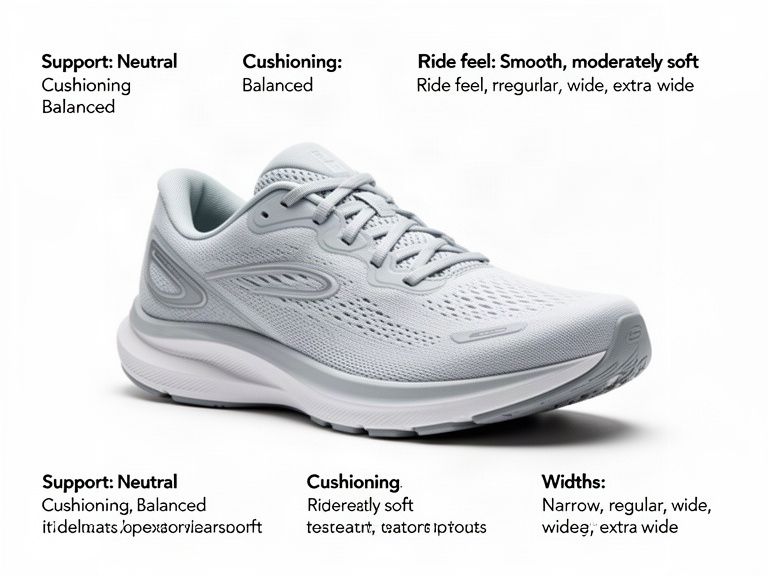
- SupportNeutral
- CushioningBalanced
- Ride feelSmooth, moderately soft
- WidthsNarrow, regular, wide, extra wide
#1Best overall9.4/10
Brooks Ghost
Brooks
A balanced, smooth neutral trainer that handles nearly every kind of run without drawing attention to itself.
Good for: Most neutral runners, from beginners to marathoners
- Comfortable, forgiving ride for easy and long runs
- Very broad range of widths
- Durable rubber outsole
- Consistent fit from one version to the next
- Not as soft as max-cushion shoes
- Too heavy to feel fast on race day
The Ghost is the shoe running-store staff hand to people who just want something that works. Brooks' DNA Loft foam gives it a cushioned but not mushy feel, and the outsole has enough rubber to keep the shoe going for a long time on pavement.
What really sets it apart is consistency. Brooks updates the Ghost almost every year, but the changes are usually small, so runners who like one version tend to like the next. It also comes in narrow, wide and extra-wide versions, which makes it one of the easiest shoes to fit.
The trade-off is that it is a generalist. It won't feel as plush as the ASICS Gel-Nimbus or as bouncy as a racing shoe. For most people, though, that middle ground is exactly what a daily trainer should be.
The short version: The most dependable first choice for a neutral daily trainer that fits a wide range of feet.
AI picture- SupportNeutral
- CushioningMaximum
- Ride feelSoft and plush
- WidthsRegular, wide, extra wide
#2Best max cushioning9.1/10
ASICS Gel-Nimbus
ASICS
A thickly cushioned neutral trainer built for comfort on long runs and recovery days.
Good for: Long, easy miles and runners who want a plush ride
- Very soft, protective cushioning
- Plush, comfortable knit upper
- Good choice for heavier runners
- Available in wide and extra-wide
- Feels sluggish at faster paces
- Higher-end option among daily trainers
- Tall stack can feel less stable on corners
The Gel-Nimbus is ASICS' most cushioned everyday trainer, and it leans hard into comfort. Recent versions pair soft FF Blast foam with ASICS' GEL technology in the heel, and the result is one of the most forgiving rides in a mainstream running shoe.
That makes it a natural fit for long runs, recovery days and runners who find firmer shoes leave their legs beat up. The upper is padded and soft, with a comfortable heel collar.
There are trade-offs. All that foam makes the Nimbus feel slow when you try to pick up the pace, and the high stack is less stable than the Ghost or Ride on uneven ground. It also sits at the upper end of the daily-trainer range. If your priority is comfort over long distances, those compromises are easy to accept.
The short version: Pick it when comfort on long, easy runs matters more than speed.
AI picture- SupportNeutral
- CushioningHigh
- Ride feelSoft with a rolling rocker
- WidthsRegular, wide
#3Best lightweight cushioning9.0/10
HOKA Clifton
HOKA
A high-stack, rockered neutral trainer that feels surprisingly light for how much cushioning it carries.
Good for: Runners who want lots of foam without a heavy shoe
- Generous cushioning at a low weight
- Rocker sole makes easy runs feel smooth
- Popular with walkers and people on their feet all day
- Wide version available
- Exposed foam on the outsole wears faster than full rubber
- Soft, tall platform is less stable on trails
The Clifton is the shoe that made HOKA's thick-foam, rockered design mainstream. It packs a lot of cushioning under the foot yet stays light, and the curved sole helps you roll from heel to toe without much effort, which is why easy miles in it feel so smooth.
That combination also makes the Clifton popular beyond running: nurses, walkers and people who stand all day often wear it for the same reasons.
The compromises come from the design. HOKA saves weight by leaving some foam exposed on the outsole, so it can wear faster than a shoe like the Ghost. The tall platform also feels a bit less planted on uneven paths. On roads and treadmills, though, it is one of the most comfortable light trainers you can buy.
The short version: A light, cushioned road shoe that makes easy miles feel effortless.
AI picture- SupportStability (GuideRails)
- CushioningBalanced
- Ride feelStable, moderately soft
- WidthsNarrow, regular, wide, extra wide
#4Best stability9.0/10
Brooks Adrenaline GTS
Brooks
A cushioned stability trainer that uses guide rails to keep the foot aligned without a rigid, clunky feel.
Good for: Runners who overpronate or want a more supportive feel
- GuideRails support feels natural rather than forceful
- Same comfortable cushioning family as the Ghost
- Excellent range of widths
- Long-running line with a loyal following
- Heavier than neutral trainers
- Runners with neutral gait may not need the extra support
The Adrenaline GTS ("Go-To Support") is one of the best-known stability shoes, and its approach has aged well. Instead of a hard wedge of dense foam under the arch, Brooks uses GuideRails: raised sections along the sides of the heel that limit excess side-to-side movement of the foot and knee.
The effect is support that only really kicks in when you need it, so the shoe feels closer to a normal daily trainer than the stiff stability shoes of years past. Cushioning is similar to the Ghost, and the width range is just as generous.
If your gait is neutral, the extra structure and weight won't add much, and the Ghost is the better buy. But for runners who overpronate, have flat feet or feel their form fade late in long runs, the Adrenaline is an easy recommendation.
The short version: The go-to stability shoe for runners who want support that does not feel stiff.
AI picture- SupportNeutral
- CushioningBalanced
- Ride feelResponsive, medium-firm
- WidthsRegular, wide
#5Best all-rounder for mixed paces8.7/10
Saucony Ride
Saucony
A versatile neutral trainer with a slightly firmer, more responsive feel than most plush daily shoes.
Good for: Runners who mix easy days with some faster workouts
- Lively enough for tempo runs and strides
- Secure, comfortable upper
- Lighter than many cushioned trainers
- Good middle ground between soft and firm
- Less plush than max-cushion shoes on long runs
- Fewer width options than Brooks or New Balance
The Ride sits in the middle of Saucony's lineup, between lighter speed shoes and the more cushioned Triumph, and that middle ground is its strength. Its PWRRUN-family foam feels a little firmer and more responsive than shoes like the Gel-Nimbus, so it doesn't feel sluggish when you pick up the pace.
That makes it a good single-shoe choice for runners who do most of their miles easy but like to add strides, tempo runs or a weekly workout. The upper tends to lock the foot in well without excessive padding.
If you want the softest possible ride for long, slow runs, look at the Nimbus or Clifton instead. And if you need extra-wide sizing, Brooks and New Balance cover more widths. For a versatile, do-it-all trainer, the Ride is easy to like.
The short version: A versatile neutral trainer for runners who want a bit of pop with their cushioning.
AI picture- SupportNeutral
- CushioningBalanced
- Ride feelStable, medium-soft
- WidthsNarrow through extra wide
#6Best for wide feet8.6/10
New Balance Fresh Foam X 880
New Balance
A durable, middle-of-the-road neutral trainer offered in one of the widest size and width ranges in running.
Good for: Runners who need extra width or a dependable workhorse
- Very broad width range for both men and women
- Durable outsole for high-mileage training
- Stable, predictable ride
- Comfortable for running and all-day wear
- Not especially light or lively
- Styling is plain compared with newer max-cushion shoes
The 880 is New Balance's everyday workhorse. It uses Fresh Foam X cushioning in a moderate stack, which gives a stable, predictable ride that suits easy runs, long runs and walking alike. It won't excite you, but it rarely gives runners problems either.
Its biggest advantage is fit. New Balance has long been the go-to brand for runners with wide or narrow feet, and the 880 is typically offered in several widths for both men and women, well beyond the single wide option many brands carry. If other shoes squeeze your forefoot or leave your heel sloppy, that range makes a real difference.
The trade-off is personality: it is heavier and less bouncy than shoes like the Saucony Ride. As a durable, comfortable trainer that actually fits unusual feet, though, it is hard to beat.
The short version: The dependable choice when finding the right width is your biggest challenge.
Compare at a glance
| Pick | Support | Cushioning | Ride feel | Widths | Score |
|---|---|---|---|---|---|
| #1 Brooks Ghost | Neutral | Balanced | Smooth, moderately soft | Narrow, regular, wide, extra wide | 9.4 |
| #2 ASICS Gel-Nimbus | Neutral | Maximum | Soft and plush | Regular, wide, extra wide | 9.1 |
| #3 HOKA Clifton | Neutral | High | Soft with a rolling rocker | Regular, wide | 9.0 |
| #4 Brooks Adrenaline GTS | Stability (GuideRails) | Balanced | Stable, moderately soft | Narrow, regular, wide, extra wide | 9.0 |
| #5 Saucony Ride | Neutral | Balanced | Responsive, medium-firm | Regular, wide | 8.7 |
| #6 New Balance Fresh Foam X 880 | Neutral | Balanced | Stable, medium-soft | Narrow through extra wide | 8.6 |
Specs come from manufacturer listings when we wrote this guide and can change between production runs.
Buying tips
Neutral or stability?
Neutral shoes let your foot move naturally and suit most runners. If your old shoes wear fairly evenly and you don't feel your arches collapsing on longer runs, start here.
Stability shoes add firmer foam, guide rails or a wider base on the inside of the shoe to limit how far the foot rolls inward (overpronation). They can feel more planted for heavier runners, people with flat feet and anyone who feels their knees or arches tire late in a run. Modern stability shoes are far less rigid than the motion-control bricks of the past, so they no longer feel clunky.
If you're unsure, a running store gait check or a look at the wear pattern on an old pair is a good first step.
How much cushioning do you want?
- Balanced cushioning (Brooks Ghost, Saucony Ride) feels protective without being mushy, and works for easy runs and some faster efforts.
- Max cushioning (ASICS Gel-Nimbus, HOKA Clifton) uses a thick stack of soft foam. It's great for long, slow miles and heavier runners, but can feel less stable on sharp turns and trails.
More foam is not automatically better. If a soft shoe makes your ankles wobble, a firmer, lower shoe may feel more comfortable.
Fit beats features
Buy running shoes about a half size larger than your dress shoes, leaving roughly a thumb's width in front of your longest toe, because feet swell on longer runs. Your heel should stay put without the laces cranked tight. If the shoe pinches across the ball of your foot, look for a wide version rather than sizing up; Brooks and New Balance offer especially broad width ranges.
Heel-to-toe drop and rocker soles
Drop is the height difference between heel and forefoot. Higher-drop shoes take some strain off the Achilles and calves, while lower-drop shoes encourage a midfoot landing. Brands change drop between versions, so check the current spec if you're sensitive to it. Rocker soles, which curve up at the toe, help you roll through each step and feel especially smooth at easy paces.
When to replace them
Most daily trainers last roughly 300 to 500 miles. Signs it's time: the midsole has deep creases, the outsole is worn through to foam, or runs that used to feel fine now leave your legs unusually sore. Rotating two pairs lets the foam recover between runs and helps both last longer.
FAQ
QCan I use running shoes for walking or the gym?
For walking, yes; a cushioned running shoe makes a comfortable walking shoe. For weightlifting, a soft, tall running shoe is less stable than a flat training shoe, so heavy lifts are better done in shoes with a firmer, lower sole.
QShould I buy the newest version of a running shoe?
Not necessarily. Updates are often small, and the previous version is usually still sold for a while. If a newer version changes the fit or foam you liked, the older one is worth tracking down.
QHow do I know if I overpronate?
Look at your old shoes: heavy wear on the inside edge and shoes that tilt inward when set on a table suggest overpronation. A gait check at a running store gives a clearer picture.
QDo I need different shoes for treadmill running?
No. Any road running shoe works on a treadmill. Because the belt is softer and more even than pavement, some runners prefer a slightly lighter or firmer shoe indoors, but it is a matter of preference.
QAre wide running shoes just a bigger size?
No. A wide version keeps the same length but adds room across the forefoot and often the midfoot. Sizing up to get more width usually leaves too much space at the toe and heel.
How we picked
We compared support type, cushioning level, foam and outsole design, available widths and how consistently each line has been updated for the most widely sold daily running shoes from Brooks, ASICS, HOKA, Saucony and New Balance, using manufacturer specifications and published running-shoe coverage. Our picks and scores are based on this research — we have not tested these products hands-on. Brands cannot pay to be included. Read our full method.
In the same aisle
More running shoes to browse
A random pull from our product catalog, not ranked or reviewed.