Best Studio Headphones in 2026
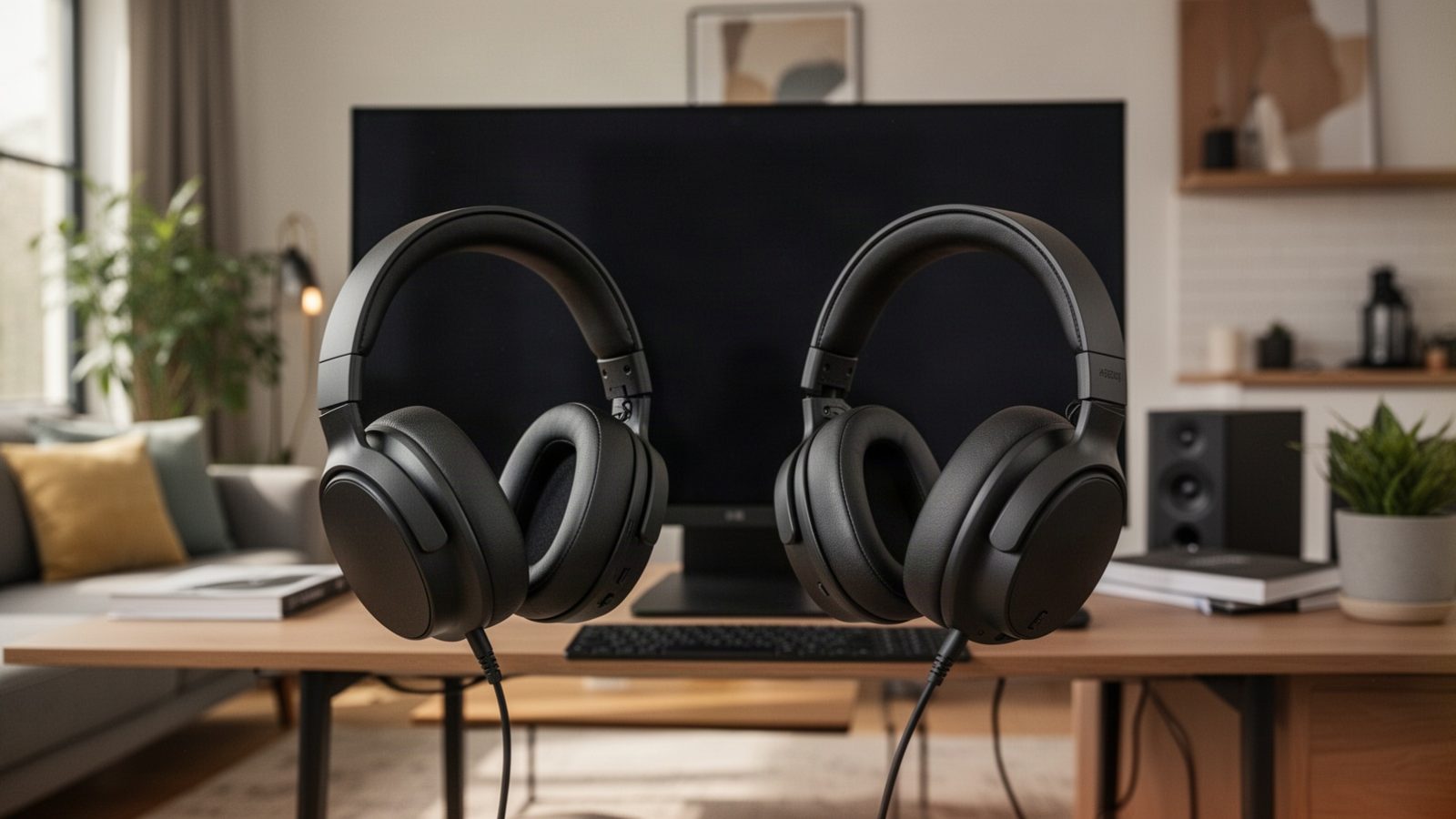
Six wired studio headphones compared — closed-back monitors for recording and podcasting, plus semi-open and open-back models for mixing and editing at home.
- 6 picks
- 6 min read
- Updated Nov 20, 2026
As an Amazon Associate I earn from qualifying purchases. If you buy through a link here we may earn a commission, at no extra cost to you. Details
Studio headphones are built to tell you the truth about a recording. Instead of the boosted bass and sparkly treble that make consumer headphones exciting, they aim for a balanced, detailed sound so you can hear a hum in the background, a harsh vocal or a muddy mix. They are also wired, durable and serviceable, because they are expected to work every day for years.
You don’t need to be a recording engineer to benefit. Podcasters, video editors, home musicians, streamers and anyone who wants an honest-sounding pair for focused listening will find studio headphones a better tool than wireless consumer models. The key choice is between closed-back designs that isolate sound for recording and open-back designs that sound more spacious for mixing. We compared long-running, widely used models from Audio-Technica, Sony, Beyerdynamic and AKG, and picked the best for recording, editing, mixing and tighter budgets.
The lineup
 Best overall Audio-Technica ATH-M50x
Home studios, podcasting and all-round use
9.3 Buy Now on Amazon
 Best for long sessions Beyerdynamic DT 770 Pro
Hours of recording, editing and streaming
9.1 Buy Now on Amazon
 Best for podcasting and broadcast Sony MDR-7506
Podcasters, video producers and voice work
9.0 Buy Now on Amazon
 Best value Audio-Technica ATH-M40x
Beginners who want a flatter sound for less
8.8 Buy Now on Amazon
 Best for mixing Beyerdynamic DT 990 Pro
Mixing and critical listening in a quiet room
8.7 Buy Now on Amazon
AI picture
- DesignClosed-back, folding
- Impedance38 ohms
- CableDetachable (three included)
#1Best overall9.3/10
Audio-Technica ATH-M50x
Audio-Technica · Model ATH-M50x
The best-known closed-back studio headphones, with punchy, detailed sound and three detachable cables.
Good for: Home studios, podcasting and all-round use
- Detailed sound with a slightly lively low end
- Easy to drive from laptops and interfaces
- Three detachable cables included
- Folds for travel and storage
- Pads can get warm in long sessions
- Low end is a little emphasized for strict mixing
- Pads wear and need eventual replacement
The ATH-M50x has been a studio staple for more than a decade, and it remains the easiest recommendation for anyone starting a home studio. Its closed-back design keeps sound from leaking into microphones, and its 38-ohm impedance means it plays loudly from a laptop or any audio interface.
Sound is detailed with a little extra punch in the bass, which makes it enjoyable for everyday listening as well as recording and editing. Audio-Technica includes three detachable cables — coiled, long straight and short straight — so you can swap for desk, studio or travel use, and the ear cups fold for storage.
For critical mixing, some engineers prefer a flatter or open-back pair, and the synthetic pads can feel warm over long sessions. As a do-everything studio headphone, though, it is the benchmark.
The short version: The best all-round studio headphones for recording, editing and everyday listening.
AI picture- DesignClosed-back, velour pads
- Impedance32, 80 or 250 ohms
- CableFixed
#2Best for long sessions9.1/10
Beyerdynamic DT 770 Pro
Beyerdynamic
A comfortable closed-back classic with soft velour pads, offered in several impedance versions.
Good for: Hours of recording, editing and streaming
- Velour pads are comfortable for hours
- Good isolation for recording
- Choice of impedance to match your gear
- Rugged, serviceable build
- Cable isn’t detachable
- Treble can sound bright to some ears
- Doesn’t fold
Beyerdynamic’s DT 770 Pro is famous for comfort. Plush velour ear pads and a gentle clamp make it easy to wear through long recording, editing or streaming sessions, and the closed-back design isolates well enough to keep sound out of nearby microphones.
It comes in versions with different impedance. The 32-ohm model suits phones and laptops, the 80-ohm model is the popular studio choice for audio interfaces, and the 250-ohm model is meant for dedicated headphone amps. Choose based on what you’ll plug into.
The cable is permanently attached, and the crisp treble sounds bright to some listeners. Beyerdynamic sells spare parts, though, and many studios run these for years. If comfort tops your list, this is the one to get.
The short version: The most comfortable closed-back studio headphones for long sessions.
AI picture- DesignClosed-back, folding
- Impedance63 ohms
- CableFixed, coiled
#3Best for podcasting and broadcast9.0/10
Sony MDR-7506
Sony · Model MDR-7506
A decades-old industry workhorse with clear, detailed mids and a folding design.
Good for: Podcasters, video producers and voice work
- Clear, detailed midrange that flatters speech editing
- Light and foldable
- Widely used standard in broadcast and film
- Budget-friendly for its reputation
- Cable isn’t detachable
- Ear pads flake with age and need replacing
- Bright treble can be fatiguing
The Sony MDR-7506 has been a fixture of radio stations, film sets and podcast studios for decades, and its longevity speaks to how well it does its job. Its clear, forward midrange makes speech easy to judge, so problems like mouth noise, hiss and harsh sibilance stand out when you edit dialogue.
It is light, folds into a small bag and is easy to drive from field recorders, cameras and laptops. Because so many professionals use it, it’s also a common reference: what you hear on the MDR-7506 is what many editors hear.
The coiled cable is fixed, the stock pads tend to flake over time, and the treble can feel bright after many hours. Replacement pads are inexpensive, and as a dependable, budget-friendly pair for voice work, it is hard to beat.
The short version: A proven, affordable choice for podcasting, dialogue editing and broadcast work.
AI picture- DesignClosed-back, folding
- Impedance35 ohms
- CableDetachable (two included)
#4Best value8.8/10
Audio-Technica ATH-M40x
Audio-Technica · Model ATH-M40x
A more budget-friendly sibling of the M50x with flatter tuning and detachable cables.
Good for: Beginners who want a flatter sound for less
- Flatter, more neutral tuning than the M50x
- Detachable cables, with two included
- Easy to drive from any device
- Budget-friendly
- Less bass impact for casual listening
- Pads less plush than pricier models
- Synthetic pads can get warm in long sessions
The ATH-M40x shares the M50x’s folding, closed-back design but costs less and tunes the sound flatter. That makes it arguably better for checking mixes and edits, even if it sounds a little less exciting for casual listening.
At 35 ohms it plays loudly from laptops and interfaces, and Audio-Technica includes two detachable cables, so a damaged cable is an easy fix. The build is simple but robust, and the ear cups fold for storage.
The pads are thinner than on pricier models, and the sound has less bass impact than the M50x’s. For a first pair of studio headphones, a student or a budget-conscious home studio, it is a smart, honest-sounding choice.
The short version: The best value closed-back studio headphones, with a flatter sound than its famous sibling.
AI picture- DesignOpen-back, velour pads
- Impedance250 ohms (classic version)
- CableFixed
#5Best for mixing8.7/10
Beyerdynamic DT 990 Pro
Beyerdynamic
A classic open-back studio headphone with a wide, airy sound and comfortable velour pads.
Good for: Mixing and critical listening in a quiet room
- Wide, spacious sound for judging stereo and reverb
- Very comfortable velour pads
- Durable, serviceable build
- Good value for an open-back studio model
- Needs a strong headphone output or amp
- Leaks sound, so not for recording near mics
- Treble can sound bright
Open-back headphones are the preferred tool for mixing on headphones, and the DT 990 Pro is one of the longest-running studio options. Its open grilles give a wide, airy presentation that makes it easier to judge panning, reverb and the space between instruments than on closed headphones.
Comfort matches the DT 770 Pro, with the same soft velour pads. The classic 250-ohm version needs an audio interface or headphone amp with a strong output to reach its full potential — it will sound quiet and thin from many laptops.
Because it leaks sound freely and blocks almost nothing, it isn’t suited to recording near microphones or noisy rooms. For a quiet home studio where mixing is the main task, it is a comfortable, revealing choice.
The short version: A comfortable, spacious open-back pair for mixing, if you have the power to drive it.
 AI picture
- DesignSemi-open, over-ear
- Impedance55 ohms
- CableDetachable mini-XLR
#6Best budget semi-open8.3/10
AKG K240 Studio
AKG · Model K240 Studio
A long-running semi-open design with a natural sound and a replaceable mini-XLR cable.
Good for: Budget mixing and editing at home
- Semi-open sound is more natural than many closed models
- Light, with a self-adjusting headband
- Detachable cable
- Very budget-friendly
- Leaks sound, so not ideal near microphones
- Bass is light
- Plastic build feels basic
AKG’s K240 Studio has been around for decades and remains one of the most affordable ways to get a more open, natural sound for mixing and editing. Its semi-open design lets some air through the ear cups, which reduces the closed-in feeling of sealed headphones.
The self-adjusting headband and light weight make it comfortable for long sessions, and the mini-XLR cable detaches for easy replacement. At 55 ohms, it works with most audio interfaces and laptops.
Bass is light, the plastic build is basic, and sound leakage means it isn’t ideal for recording vocals next to a microphone. For a budget home studio focused on mixing and editing, it offers a lot for very little.
The short version: A budget-friendly semi-open option for natural-sounding mixing and editing.
Compare at a glance
| Pick | Design | Impedance | Cable | Score |
|---|---|---|---|---|
| #1 Audio-Technica ATH-M50x | Closed-back, folding | 38 ohms | Detachable (three included) | 9.3 |
| #2 Beyerdynamic DT 770 Pro | Closed-back, velour pads | 32, 80 or 250 ohms | Fixed | 9.1 |
| #3 Sony MDR-7506 | Closed-back, folding | 63 ohms | Fixed, coiled | 9.0 |
| #4 Audio-Technica ATH-M40x | Closed-back, folding | 35 ohms | Detachable (two included) | 8.8 |
| #5 Beyerdynamic DT 990 Pro | Open-back, velour pads | 250 ohms (classic version) | Fixed | 8.7 |
| #6 AKG K240 Studio | Semi-open, over-ear | 55 ohms | Detachable mini-XLR | 8.3 |
Specs come from manufacturer listings when we wrote this guide and can change between production runs.
Buying tips
Closed-back, open-back or semi-open?
Closed-back headphones have solid ear cups. They keep sound from leaking out, which matters when a microphone is recording nearby, and they block some outside noise. They are the right choice for tracking vocals, podcasting and working in shared spaces.
Open-back headphones have grilles on the ear cups, so sound flows in and out freely. They sound more spacious and natural, which makes judging stereo width and reverb easier for mixing. The trade-off: they leak sound and block almost no outside noise.
Semi-open designs sit in between, offering some of the openness with a little less leakage.
Impedance and what you’ll plug into
Impedance, measured in ohms, affects how much power headphones need. Models around 30–65 ohms play loudly from laptops, phones with adapters and most audio interfaces. High-impedance models, such as 250-ohm versions, need a stronger headphone output from an audio interface or a dedicated headphone amp to reach full volume. If you will mostly plug into a laptop, choose a lower-impedance model.
Check the plug as well. Most studio headphones end in a 3.5mm plug with a 1/4-inch adapter, so they fit both laptops and studio gear. Many recent phones and some laptops have no headphone jack at all, so budget for a USB-C headphone adapter if you need one.
Accurate isn’t the same as exciting
Studio headphones can sound flat at first if you are used to bass-heavy consumer headphones. That neutrality is the point: if a mix sounds good on accurate headphones, it is more likely to translate to car stereos, earbuds and speakers. Give your ears a few days to adjust before deciding.
Comfort and cables
Long editing sessions make comfort essential. Velour pads breathe better than synthetic leather; deeper cups keep ears from touching the drivers. A detachable cable is a real advantage, because cables are the most common failure point and are cheap to replace. Coiled cables give freedom to move around a desk; straight cables are lighter.
What to skip
Avoid wireless and noise-cancelling headphones for recording and editing: Bluetooth adds delay that makes recording along to a track difficult, and noise-cancelling processing changes the sound. Also skip anything marketed with heavy bass boost.
Care tips
Hang headphones on a stand or hook rather than leaving them on a desk to be knocked off. Replace worn ear pads — most studio models offer replacements — and unplug by pulling the connector, not the cable. Store the 1/4-inch adapter somewhere safe, since it is easy to lose.
FAQ
QCan I use studio headphones for everyday music listening?
Yes. Many people love their detail and balance. They may sound less bass-heavy than consumer headphones, and as wired models they need a headphone jack or a USB-C adapter for modern phones.
QDo I need a headphone amplifier?
Not for low-impedance models like the Audio-Technica ATH-M50x or Sony MDR-7506, which run well from laptops and audio interfaces. High-impedance models, such as the 250-ohm Beyerdynamic DT 990 Pro, sound best with an interface or amp that has a strong headphone output.
QCan I mix music on headphones alone?
Many home producers do, especially with open-back headphones. Headphones exaggerate stereo separation compared with speakers, so check mixes on other systems such as earbuds, a car stereo or speakers before finalizing.
QAre studio headphones good for gaming or streaming?
They work well for gaming audio and monitoring your stream, especially open-back models for positional sound. They don’t include a microphone, so you’ll need a separate mic.
QWhy are studio headphones still wired?
A cable delivers audio without delay or compression and never needs charging. Delay matters when recording, because even a fraction of a second makes it hard to play or sing in time with a track.
How we picked
We compared manufacturer specifications, impedance, back design, cable type, replaceable parts and published reviews of tonal balance, comfort and durability for long-running studio headphones widely used in home and professional studios. Our picks and scores are based on this research — we have not tested these products hands-on. Brands cannot pay to be included. Read our full method.
In the same aisle
More studio headphones to browse
A random pull from our product catalog, not ranked or reviewed.