Best Winter Tires in 2026
Five proven winter tire lines compared — studless picks for ice and slush, plus studdable options for the harshest roads and tighter budgets.
- 5 picks
- 5 min read
- Updated Nov 20, 2026

As an Amazon Associate I earn from qualifying purchases. If you buy through a link here we may earn a commission, at no extra cost to you. Details
Winter tires are not just all-season tires with deeper grooves. Their rubber is formulated to stay soft and grippy in freezing temperatures, and their tread is cut with thousands of small slits, called sipes, that bite into snow and ice. When temperatures stay low, the difference shows up most when braking and turning, which is exactly when it matters.
Choosing between them comes down to where you drive. Some lines focus on glare ice in cities, others on deep snow on rural roads, and a few accept metal studs for the iciest conditions. We compared the best-known winter tires from Michelin, Bridgestone, Nokian, General and Firestone, including two flagship lines that were updated for 2026. Whichever you pick, match the size, load index and speed rating to your vehicle and confirm fitment before you order.
The lineup
 Best overall Michelin X-Ice Snow
Most drivers who want one strong all-round winter tire
9.2 Buy Now on Amazon
 Best for icy roads Bridgestone Blizzak IcePeak
Drivers who face frequent ice and slush
9.1 Buy Now on Amazon
 Best for severe winters Nokian Hakkapeliitta R5
Northern drivers who face long, harsh winters
8.9 Buy Now on Amazon
 Best studdable General Altimax Arctic 12
Rural drivers who want the option of studs
8.5 Buy Now on Amazon
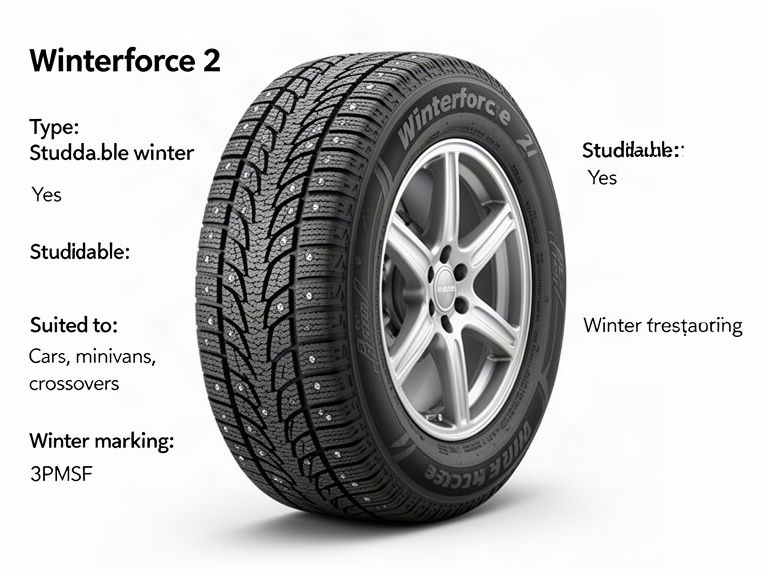 Best value Firestone Winterforce 2
Drivers who need winter tires on a tight budget
8.2 Buy Now on Amazon
AI picture
- Tire typeStudless winter
- StuddableNo
- Suited toCars, minivans, crossovers, SUVs
- Winter marking3PMSF
#1Best overall9.2/10
Michelin X-Ice Snow
Michelin
A studless winter tire built for braking grip on ice and snow, with a successor rolling out from 2026.
Good for: Most drivers who want one strong all-round winter tire
- Strong reputation for ice and snow braking
- Studless, so no seasonal stud restrictions
- Car and SUV sizes
- Newer X-Ice Snow+ version arriving in more sizes
- Premium-priced
- Two generations sold side by side can confuse shoppers
- Soft compound wears quickly if left on in warm weather
The X-Ice Snow has been Michelin’s flagship studless winter tire since around 2020, and it built a reputation for balanced grip on ice, snow and cold, wet pavement. Michelin covered both passenger cars and SUVs with it, so most drivers can find a fitting size.
In 2026 Michelin began rolling out the X-Ice Snow+, which keeps the tread pattern but uses an updated compound and construction; Michelin says it brakes shorter on winter roads than the original. Sizes are being added in stages, so for the next season or two you may see both versions. Either is a sound choice — just check which one a listing actually is.
The trade-off is cost: this is a premium-priced tire. Match the size, load index and speed rating your vehicle calls for, and confirm fitment for your make, model and year before ordering.
The short version: The benchmark studless winter tire for drivers who want strong grip on every kind of winter road.
AI picture- Tire typeStudless winter
- StuddableNo
- Suited toCars, minivans, crossovers, SUVs, pickups
- Winter marking3PMSF and Ice Grip symbol
#2Best for icy roads9.1/10
Bridgestone Blizzak IcePeak
Bridgestone
Bridgestone’s new flagship studless winter tire, replacing both the Blizzak WS90 and Blizzak DM-V2.
Good for: Drivers who face frequent ice and slush
- Carries both the 3PMSF and Ice Grip symbols
- One line covers cars through pickup trucks
- Launched in a wide range of 14- to 22-inch sizes
- Blizzak name has a long record on ice
- Brand-new line with little long-term owner feedback
- Premium-priced
- Older WS90 and DM-V2 stock may still appear in listings
For years, the Blizzak WS90 (cars) and DM-V2 (SUVs and trucks) were the default choices for drivers who prioritize ice grip. In 2026 Bridgestone replaced both with a single line, the Blizzak IcePeak, which launched nationally in May 2026 in over a hundred sizes from 14 to 22 inches.
Bridgestone says it is the first of its tires to carry both the three-peak mountain snowflake symbol and the Ice Grip symbol, an additional marking for tires that meet an ice-traction standard. The company also claims longer usable life than earlier Blizzaks.
Because it is new, there is limited real-world feedback so far, and closeout WS90 and DM-V2 tires may still be listed. Check the exact model name, and confirm the size and fitment for your make, model and year before buying.
The short version: The pick for ice-heavy commutes, building on one of the best-known names in winter tires.
AI picture- Tire typeStudless winter
- StuddableNo
- Suited toCars (R5); crossovers and SUVs (R5 SUV)
- Winter marking3PMSF
#3Best for severe winters8.9/10
Nokian Hakkapeliitta R5
Nokian Tyres
A Nordic studless winter tire from the Finnish brand that specializes in cold-climate tires, with a separate SUV version.
Good for: Northern drivers who face long, harsh winters
- From a brand focused on cold-climate tires
- Dedicated R5 SUV version for crossovers and light trucks
- Designed for long stretches of snow and ice
- Studless, so no stud restrictions
- Fewer retailers stock it than Michelin or Bridgestone
- Premium-priced
- More tire than you need where winters are mild
Nokian Tyres comes from Finland and is best known for tires designed for long Nordic winters. The Hakkapeliitta R5 is its studless winter tire for passenger cars, and the Hakkapeliitta R5 SUV covers crossovers, SUVs and light trucks.
Nokian positions the R5 for sustained snow, slush and ice rather than the occasional cold snap, which suits drivers in the northern states and mountain areas where roads stay white for months.
The trade-offs are availability and cost: fewer sellers carry Nokian than the big brands, and the R5 is premium-priced. If your winters are mild with only occasional snow, an all-weather tire may serve you better. Choose between the R5 and R5 SUV based on your vehicle’s specified size and load index, and confirm fitment for your make, model and year.
The short version: A specialist pick for drivers whose winters are long, cold and consistently snowy.
AI picture- Tire typeStuddable winter
- StuddableYes
- Suited toCars, minivans, crossovers
- Winter marking3PMSF
#4Best studdable8.5/10
General Altimax Arctic 12
General Tire
A studdable winter tire with an aggressive tread for deep snow, popular as an affordable alternative to studless flagships.
Good for: Rural drivers who want the option of studs
- Can be studded for extra grip on hard-packed ice
- Aggressive tread pattern for deep snow
- Usually more affordable than studless flagships
- Works without studs where they are restricted
- Studs are noisy and restricted in many states
- Some sizes have been discontinued
- Unstudded ice grip trails the best studless tires
The Altimax Arctic 12 is General Tire’s studdable winter tire, and it has long been a favorite with drivers on rural roads that stay snow-packed or icy for weeks. It can be run as-is or fitted with metal studs by a tire shop for extra bite on hard ice.
Independent winter tire tests have shown how much studs help on ice, and studded tires of this type often outbrake studless ones on glare ice. Without studs, it still has a deep, aggressive tread suited to fresh snow.
The trade-offs come with the studs themselves: road noise, possible pavement wear and seasonal restrictions that vary by state. Availability also varies, as some sizes have been discontinued. Check your state’s stud rules and confirm the size and fitment for your make, model and year before you buy.
The short version: The pick if you want studs on hard-packed ice, at a more affordable price than the flagships.
AI picture- Tire typeStuddable winter
- StuddableYes
- Suited toCars, minivans, crossovers
- Winter marking3PMSF
#5Best value8.2/10
Firestone Winterforce 2
Firestone
A budget-friendly studdable winter tire from Bridgestone’s Firestone brand for snowy commutes.
Good for: Drivers who need winter tires on a tight budget
- Budget-friendly way into a true winter tire
- Studdable for icy regions
- Deep tread for snow traction
- Widely sold through tire retailers
- Ice grip trails premium studless tires without studs
- Ride and noise are basic
- Studs add noise and are restricted in many states
Firestone is Bridgestone’s mid-market brand, and the Winterforce 2 has been its affordable winter tire for many years. It is studdable, with a deep, chunky tread aimed at snow traction on everyday commutes.
The appeal is straightforward: a real winter tire with the three-peak mountain snowflake symbol for considerably less than premium studless lines. For drivers who would otherwise make do with all-season tires, that is a meaningful upgrade in snow.
Expect compromises: without studs, budget winter tires like this generally don’t match premium studless tires on glare ice, and ride comfort and road noise are basic. It is still far better in snow than an all-season tire. As with any tire, match the size, load index and speed rating on your door jamb and confirm fitment for your exact vehicle.
The short version: An affordable, no-frills winter tire that is a big step up from running all-seasons in snow.
Compare at a glance
| Pick | Tire type | Studdable | Suited to | Winter marking | Score |
|---|---|---|---|---|---|
| #1 Michelin X-Ice Snow | Studless winter | No | Cars, minivans, crossovers, SUVs | 3PMSF | 9.2 |
| #2 Bridgestone Blizzak IcePeak | Studless winter | No | Cars, minivans, crossovers, SUVs, pickups | 3PMSF and Ice Grip symbol | 9.1 |
| #3 Nokian Hakkapeliitta R5 | Studless winter | No | Cars (R5); crossovers and SUVs (R5 SUV) | 3PMSF | 8.9 |
| #4 General Altimax Arctic 12 | Studdable winter | Yes | Cars, minivans, crossovers | 3PMSF | 8.5 |
| #5 Firestone Winterforce 2 | Studdable winter | Yes | Cars, minivans, crossovers | 3PMSF | 8.2 |
Specs come from manufacturer listings when we wrote this guide and can change between production runs.
Buying tips
Why winter tires make a difference
All-season rubber stiffens as temperatures drop, and once it does, grip suffers on cold pavement, snow and ice. Winter compounds are designed to stay flexible in the cold, while dense siping and deep, open tread blocks pack and release snow. Every tire in this guide carries the three-peak mountain snowflake (3PMSF) symbol. A common rule of thumb is to fit winter tires once daytime temperatures stay below about 45°F.
Studless or studdable?
Studless tires rely on rubber chemistry and siping alone. They are quieter, legal everywhere, and the right choice for most drivers, including those who face icy city streets.
Studdable tires have molded holes for metal studs, usually installed by a tire shop. Studs add bite on hard-packed ice, but they are noisier on dry pavement and many states restrict when — or whether — they can be used. Check your state’s rules before choosing studs. Studdable tires can also be run without studs.
Get the size and fitment right
Start with the tire placard on the driver’s door jamb or your owner’s manual, then confirm fitment for your exact make, model and year with the seller’s fitment checker or a tire shop. Many drivers buy winter tires in a slightly smaller wheel size to get a taller sidewall; only do this with a size listed as approved for your vehicle. Winter tires often carry a lower speed rating than original tires, so check what your owner’s manual allows, and never go below the specified load index.
Fit four, and consider a second set of wheels
Always fit winter tires on all four corners. Two winter tires mixed with two all-seasons can make the car unbalanced in a slide. Mounting winter tires on their own set of wheels makes seasonal swaps quicker and easier on the tires. Either way, have them professionally mounted and balanced, and ask about TPMS sensors for the second wheel set.
When to swap, and how to store them
Put winter tires on before the first lasting cold snap and take them off in spring, since soft winter rubber wears quickly in warm weather. Store the off-season set in a cool, dry, dark place, away from electric motors and heaters. Snow grip drops as tread wears, so many drivers retire winter tires well before they reach the legal minimum depth.
FAQ
QDo I really need four winter tires?
Yes. Fitting winter tires only on the drive axle leaves the other end of the car with much less grip, which can make it harder to control in a skid. Tire makers recommend winter tires in sets of four.
QAre studded tires legal?
It depends on where you live. Some states allow studs only during set months, some restrict them heavily, and rules can change. Check your state’s current regulations before installing studs.
QCan I keep winter tires on all year?
It is not recommended. Winter compounds wear quickly in warm weather and give up some dry and wet grip compared with all-season tires. Swap them out once spring temperatures stay mild.
QHow do I find the right winter tire size?
Check the placard on the driver’s door jamb or your owner’s manual, and confirm fitment for your make, model and year with the seller’s fitment checker or a tire shop, especially if you plan to change wheel size.
QWhat is the difference between 3PMSF and M+S?
M+S (mud and snow) is a tread-design marking found on many all-season tires. The three-peak mountain snowflake symbol means the tire met an industry snow-traction test, so it is a better sign of real winter capability.
How we picked
We compared each tire line’s design (studless or studdable), winter markings, intended vehicle types, size availability and model updates, using manufacturer information and published industry coverage and test reports. Our picks and scores are based on this research — we have not tested these products hands-on. Brands cannot pay to be included. Read our full method.
In the same aisle
More winter tires to browse
A random pull from our product catalog, not ranked or reviewed.