Best Coding Robots for Kids in 2026
Six programmable robots compared, from screen-free floor robots for preschoolers to app-coded bots that grow into JavaScript and Python.
- 6 picks
- 5 min read
- Updated Nov 20, 2026

As an Amazon Associate I earn from qualifying purchases. If you buy through a link here we may earn a commission, at no extra cost to you. Details
A coding robot turns an abstract idea — a list of instructions a machine follows in order — into something a child can watch roll across the kitchen floor. Press forward, forward, turn left, go, and the robot does exactly that, mistakes included. Fixing the mistake is the whole game.
The options split sharply by age. Robots for preschoolers use buttons or color cards and need no screen at all, while robots for older kids are programmed from a tablet or computer and can step up to typed languages. Price, battery type and the device you need to own vary just as much. We compared well-established robots from makers that have supported their products for years, and matched each one to the stage of child it suits best.
The lineup
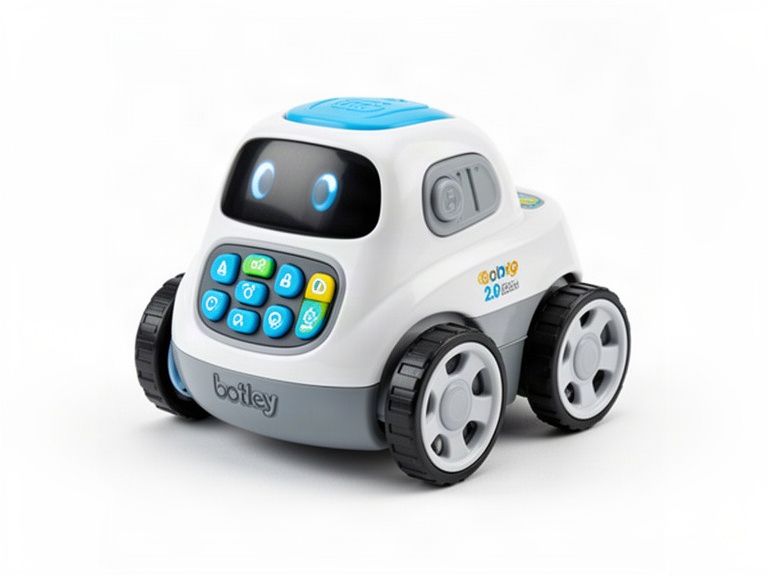 Best overall Learning Resources Botley 2.0 Coding Robot Activity Set
Kindergarten to early grade school, screen-free
9.1 Buy Now on Amazon
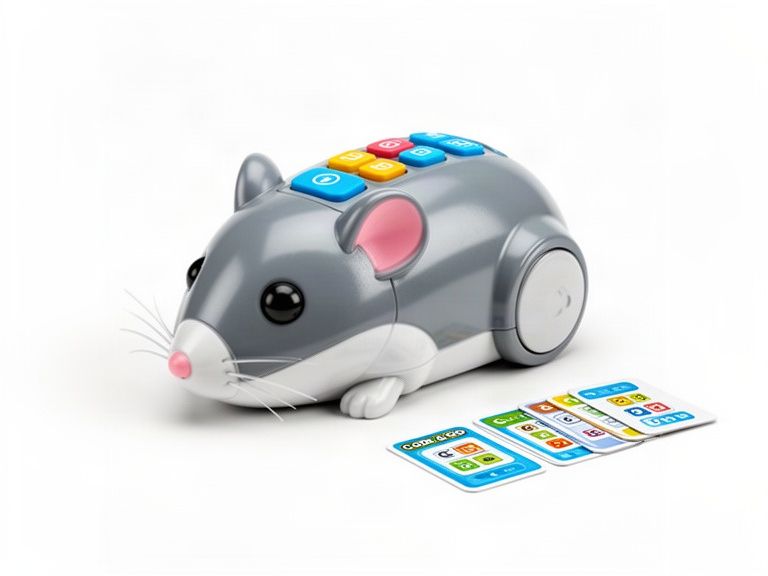 Best for preschoolers Learning Resources Code & Go Robot Mouse Activity Set
Preschool and kindergarten beginners
8.6 Buy Now on Amazon
 Best card-based coding Sphero indi At-Home Learning Kit
Young kids who like puzzles more than buttons
8.7 Buy Now on Amazon
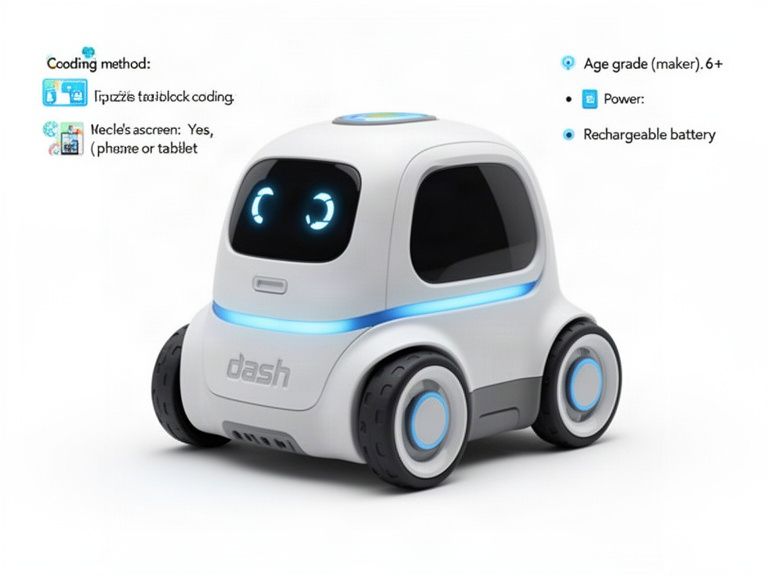 Best app-based robot Wonder Workshop Dash Coding Robot
Early grade-schoolers ready for tablet coding
8.8 Buy Now on Amazon
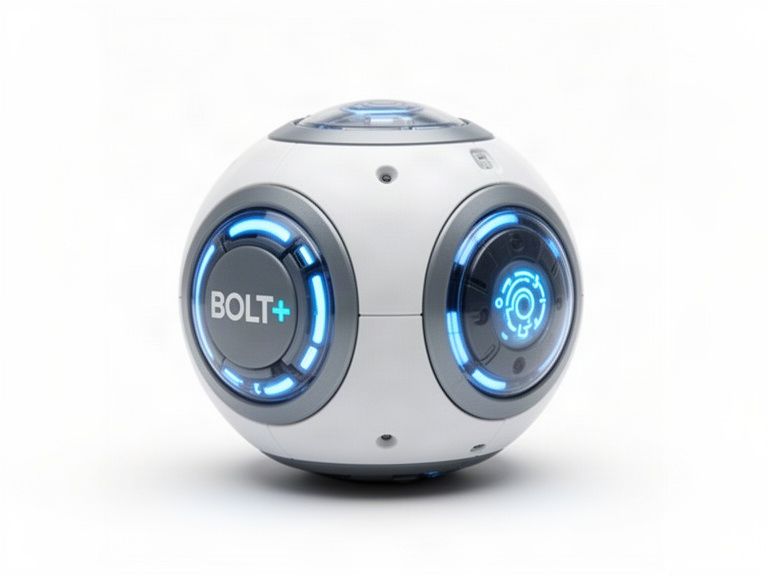 Best for older kids Sphero BOLT+ Coding Robot Ball
Ages 8 and up who want to type real code
8.9 Buy Now on Amazon
 Best build-it-yourself Makeblock mBot Neo (mBot2) Coding Robot Kit
Tinkerers who want to assemble their robot
8.4 Buy Now on Amazon
AI picture
- Coding methodRemote programmer and coding cards
- Needs a screenNo
- PowerAAA batteries
- Age grade (maker)5+
#1Best overall9.1/10
Learning Resources Botley 2.0 Coding Robot Activity Set
Learning Resources
A screen-free floor robot programmed with a remote, with coding cards, tiles and obstacles for building challenges.
Good for: Kindergarten to early grade school, screen-free
- No app or screen needed
- Goes beyond sequences to loops, if-then logic and object detection
- Activity set includes cards, tiles and obstacle pieces for challenges
- Can follow a drawn or taped line
- Runs through AAA batteries
- Remote programming gets slow for long programs
- Small accessory pieces are easy to lose
Botley 2.0 is the most complete screen-free robot in this group. Kids enter steps on a handheld remote programmer, then press go and watch Botley follow them across the floor. The activity set adds coding cards that show each step, double-sided tiles to build a course, and obstacle pieces to steer around.
What sets it apart from simpler floor robots is how far it goes. Beyond step-by-step sequences, Botley can repeat steps in loops, detect objects in its path and react with if-then logic, and follow a line. That gives a child somewhere to go after the first easy routes.
The maker rates it for ages 5 and up. It runs on AAA batteries, so rechargeables are a smart extra.
The short version: The best screen-free coding robot for young kids who are ready for more than simple sequences.
AI picture- Coding methodButtons on the mouse and coding cards
- Needs a screenNo
- PowerAAA batteries
#2Best for preschoolers8.6/10
Learning Resources Code & Go Robot Mouse Activity Set
Learning Resources
A small programmable mouse that kids steer through a buildable maze toward a piece of cheese.
Good for: Preschool and kindergarten beginners
- Very simple arrow-button programming
- Maze grid, walls and tunnels make a clear goal
- Coding cards help kids plan steps before pressing buttons
- Widely used in preschool classrooms
- Limited to simple sequences, so older kids outgrow it
- Batteries not rechargeable
- Maze pieces take up floor space
The Code & Go Robot Mouse is about as gentle an introduction to programming as exists. Kids press arrow buttons on the mouse's back to enter a route, then press go, and the mouse scurries through a maze they built from grid pieces, walls and tunnels toward a cheese wedge.
The activity set comes with coding cards so kids can lay out the route step by step before entering it, which makes it easy to spot where a plan went wrong. Activity cards supply ready-made maze challenges when inspiration runs out.
It stays at the level of simple sequences, which is exactly right for preschoolers but means kids who want loops and sensors will move on within a year or two. Check the age grade on the box for the version you buy.
The short version: A cheerful, simple first robot for preschoolers learning to plan steps in order.
AI picture- Coding methodColor cards; optional block coding in app
- Needs a screenNo (app optional)
- PowerRechargeable battery
- Age grade (maker)4+
#3Best card-based coding8.7/10
Sphero indi At-Home Learning Kit
Sphero
A small car-shaped robot that drives over colored tiles and reacts to each color, no screen required.
Good for: Young kids who like puzzles more than buttons
- Coding by laying out a path of colored tiles is very intuitive
- Rechargeable, so no battery swaps
- Optional app lets kids change what each color means
- Sturdy design for small hands
- Needs floor space to lay out longer courses
- Premium-priced for a preschool toy
- Card set limits complexity until the app comes in
indi takes a different approach from button-programmed robots. Instead of entering steps, kids lay out colored tiles and indi reads each one as it drives over it: one color means turn, another means speed up, another means stop. Building the path is the program, and seeing where indi goes wrong is the debugging.
The maker rates it for ages 4 and up, and the color-tile approach suits kids who aren't yet comfortable with arrow buttons and step counts. When they're ready, the optional Sphero Edu Jr app lets them change what each color does with simple blocks — a neat bridge toward screen-based coding.
It's rechargeable, which is a genuine advantage over battery-hungry floor robots, though the price is higher than simpler options.
The short version: A clever, rechargeable screen-free robot with a built-in path to block coding.
AI picture- Coding methodTablet apps, from puzzles to block coding
- Needs a screenYes (phone or tablet)
- PowerRechargeable battery
- Age grade (maker)6+
#4Best app-based robot8.8/10
Wonder Workshop Dash Coding Robot
Wonder Workshop
A personable rolling robot with lights, sounds and sensors, programmed through a set of free tablet apps.
Good for: Early grade-schoolers ready for tablet coding
- Expressive robot with lights, sounds and a moving head
- Several apps that step up from guided puzzles to free block coding
- Responds to sensors and sound for if-then projects
- Accessory packs add launchers and building connectors
- Premium-priced
- Requires a compatible phone or tablet
- App support depends on the company continuing updates
Dash has long been one of the most popular app-programmed robots for elementary-age kids, largely because of its personality. It rolls, turns its head, lights up and plays sounds, and kids program all of that from a tablet using a set of free apps that start with guided puzzles and move on to open-ended block coding.
Its sensors let kids write programs that react — stop when something is in the way, respond to a clap — which is where coding starts to feel creative. Accessory packs add things like a launcher and building-brick connectors.
The maker rates it for ages 6 and up. Wonder Workshop's assets were acquired by MORAVIA Education, which says Dash and its apps remain available; check that your tablet is on the current compatibility list before buying.
The short version: A lively, well-supported robot for kids moving from screen-free toys to block coding.
AI picture- Coding methodDraw, blocks or text (JavaScript, Python) in the Sphero Edu app
- Needs a screenYes (tablet or computer)
- PowerRechargeable battery
- Age grade (maker)8+
#5Best for older kids8.9/10
Sphero BOLT+ Coding Robot Ball
Sphero
A rolling robotic ball with sensors and programmable lights that can be coded by drawing, blocks or text.
Good for: Ages 8 and up who want to type real code
- Grows from draw-a-path coding to typed JavaScript and Python
- Sensors support more advanced programs
- Fast and fun to drive, which keeps kids engaged
- Sealed ball design is tough
- Premium-priced
- Needs a device and the Sphero Edu app
- A ball robot needs open floor space
Sphero BOLT+ is an updated version of the BOLT, one of the most widely used coding robots in schools. It's a clear rolling ball packed with motors, sensors and programmable lights, and it's coded through the Sphero Edu app in three ways: draw a path on screen, snap together blocks, or type JavaScript or Python.
That range is the reason to choose it. A child can start by drawing a route and, over months or years, end up writing typed code for the same robot. The maker rates it for ages 8 and up.
It's quick and lively on a smooth floor, which helps keep older kids interested, but it needs room to roll and a compatible tablet or computer. It sits at the premium end of this list.
The short version: The robot to buy for an older kid who wants a clear path from blocks to real code.
AI picture- Coding methodBlock coding and Python in mBlock
- Needs a screenYes (computer or tablet)
- PowerRechargeable battery
#6Best build-it-yourself8.4/10
Makeblock mBot Neo (mBot2) Coding Robot Kit
Makeblock
A metal-chassis robot kit that kids build themselves, then program with blocks or Python.
Good for: Tinkerers who want to assemble their robot
- Kids build the robot, so they see how motors and sensors connect
- Block coding with a route to Python
- Sensors for line following and distance
- Controller board has its own small screen
- Assembly needs patience and an adult nearby for younger kids
- Software has more setup than tablet-first robots
- Sold under two names, which can confuse shoppers
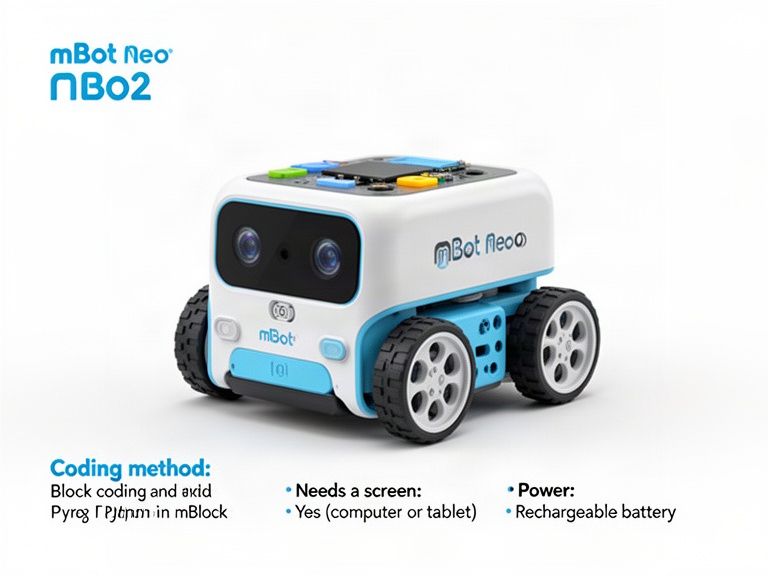
mBot Neo — sold in some places as mBot2 — is for kids who want to know what's inside the robot. It arrives as a kit: a metal chassis, motors, wheels, sensors and a controller board, which kids assemble in an afternoon before writing a single line of code.
Programming happens in Makeblock's mBlock software, which uses drag-and-drop blocks and can switch to Python. Line-following and distance sensors give kids plenty to program around, and the controller has a small built-in screen for displaying messages and values.
It's more involved than tablet-first robots: setup takes longer, and younger kids will want help with the build. Retailers list it for roughly ages 8 and up; check the box for the version you buy.
The short version: A satisfying build-and-code kit for kids who like tinkering as much as programming.
Compare at a glance
| Pick | Coding method | Needs a screen | Power | Age grade (maker) | Score |
|---|---|---|---|---|---|
| #1 Learning Resources Botley 2.0 Coding Robot Activity Set | Remote programmer and coding cards | No | AAA batteries | 5+ | 9.1 |
| #2 Learning Resources Code & Go Robot Mouse Activity Set | Buttons on the mouse and coding cards | No | AAA batteries | — | 8.6 |
| #3 Sphero indi At-Home Learning Kit | Color cards; optional block coding in app | No (app optional) | Rechargeable battery | 4+ | 8.7 |
| #4 Wonder Workshop Dash Coding Robot | Tablet apps, from puzzles to block coding | Yes (phone or tablet) | Rechargeable battery | 6+ | 8.8 |
| #5 Sphero BOLT+ Coding Robot Ball | Draw, blocks or text (JavaScript, Python) in the Sphero Edu app | Yes (tablet or computer) | Rechargeable battery | 8+ | 8.9 |
| #6 Makeblock mBot Neo (mBot2) Coding Robot Kit | Block coding and Python in mBlock | Yes (computer or tablet) | Rechargeable battery | — | 8.4 |
Specs come from manufacturer listings when we wrote this guide and can change between production runs.
Buying tips
Screen-free or app-based?
Screen-free robots are programmed by pressing arrow buttons on the robot or a remote, or by laying out color cards it reads as it drives. Kids plan a route, enter the steps and watch the result. Nothing to download, nothing to charge on a tablet, and a good fit for preschool and kindergarten.
App-based robots are programmed from a phone, tablet or computer, usually with drag-and-drop blocks. They can do far more — sensors, lights, sounds, if-then logic — and the best ones let kids move on to typed code later. The catch is that you need a compatible device and some tolerance for screen time.
Match the robot to the child, not the box
- Pre-readers: arrow-button robots and color-card robots. Steps are physical and visible.
- Early readers: screen-free robots with loops and if-then cards, or tablet apps with picture-based blocks.
- Older kids: robots coded in block languages with a path to JavaScript or Python, and build-it-yourself kits that add wiring and sensors.
Always check the maker's age grade on the box; it reflects small parts as well as difficulty.
What the coding actually looks like
Almost every kids' robot starts with sequences — steps in order. Better robots add loops (repeat these steps), conditionals (if you see an obstacle, turn) and sensors that react to lines, colors, light or distance. When comparing, look at how far the robot goes beyond simple sequences; that's what keeps it interesting after the first week.
Features worth paying for
- Rechargeable batteries. Floor robots that run on AAA cells go through them quickly.
- Challenge cards or a project guide. A robot without ideas ends up in the closet.
- A long-supported app. Check that the maker still updates the app for current phones and tablets before you buy.
- Room to grow. Text coding or add-on parts extend a robot's useful life by years.
Practical tips
Clear a stretch of hard floor — most small robots struggle on thick carpet. Before buying an app-based robot, confirm your tablet or computer is on the maker's compatibility list. And sit in on the first few sessions: debugging with a grown-up nearby is a lot less frustrating than debugging alone.
FAQ
QWhat age can kids start with a coding robot?
Screen-free robots such as the Code & Go Robot Mouse and Sphero indi are designed for preschool and kindergarten ages. Tablet-programmed robots like Dash suit early grade school, and robots with text coding, like Sphero BOLT+, are rated for ages 8 and up. Follow the age grade on the box.
QDo coding robots need a tablet or phone?
Screen-free robots don’t — they are programmed with buttons, a remote or cards. App-based robots need a compatible phone, tablet or computer, so check the maker’s device list before you buy.
QIs a coding robot better than a coding app?
They do different jobs. A robot makes the result physical, which many younger kids find easier to follow and debug. Apps alone are cheaper and can go further for older kids. Many robots use free apps, so you get some of both.
QCan siblings share one robot?
Yes, and taking turns at planning, entering and checking the program works well. Classroom sets exist for larger groups, but one robot is plenty for a family.
QWhat happens when a child outgrows a screen-free robot?
The natural next step is a tablet-programmed robot with block coding, then one that supports typed languages like JavaScript or Python. Some makers, including Sphero, offer robots at several levels.
How we picked
We compared each robot's coding methods, sensors, power source, required devices and apps, the maker's stated age grade, included challenge materials and how long the maker has supported the product. Our picks and scores are based on this research — we have not tested these products hands-on. Brands cannot pay to be included. Read our full method.
In the same aisle
More coding robots for kids to browse
A random pull from our product catalog, not ranked or reviewed.