Best Toddler Learning Toys in 2026
Five well-loved toddler toys compared — wooden classics, a talking word book and fine-motor favorites — and what each one actually asks a toddler to do.
- 5 picks
- 5 min read
- Updated Nov 20, 2026
As an Amazon Associate I earn from qualifying purchases. If you buy through a link here we may earn a commission, at no extra cost to you. Details
For a toddler, almost everything is a learning toy. Stacking, dropping, banging, sorting and naming things are how one- and two-year-olds figure out the world, and the best toys simply give those urges a good target: a hole the right shape, a peg that fits, a picture that says its own name when pressed.
That makes the "educational" label on toddler toys mostly marketing. What matters is whether a toy invites a skill your child is working on right now, holds up to rough handling, and is simple enough that they can play with it without an adult running the show. We compared long-running toddler toys from established makers — a mix of electronic and screen-free, plastic and wood — and picked the ones that do a clear job well.
The lineup
 Best overall Learning Resources Spike the Fine Motor Hedgehog
Toddlers working on grip and colors
9.1 Buy Now on Amazon
 Best talking book LeapFrog Learning Friends 100 Words Book
Toddlers who love naming pictures
8.9 Buy Now on Amazon
 Best wooden classic Melissa & Doug Shape Sorting Cube
Classic shape play that lasts for years
8.7 Buy Now on Amazon
 Best cause-and-effect toy Hape Pound & Tap Bench with Slide-Out Xylophone
Young toddlers who love to bang things
8.6 Buy Now on Amazon
 Best for younger toddlers Fisher-Price Laugh & Learn Smart Stages Puppy
Babies moving into the toddler years
8.2 Buy Now on Amazon
AI picture
- TypePeg and color-sorting toy
- MaterialPlastic
- BatteriesNone
#1Best overall9.1/10
Learning Resources Spike the Fine Motor Hedgehog
Learning Resources
A chunky hedgehog whose colorful quills come out and push back in, for gripping, sorting and counting play.
Good for: Toddlers working on grip and colors
- Simple, open-ended play a toddler can do alone
- Chunky quills are easy for small hands to grip
- Quills store inside the body, so pieces don't wander off
- Grows into color sorting and counting games
- One main activity
- Needs a firm push that very young toddlers may find tricky
Spike is a good example of a toddler toy that does one thing well. The hedgehog's body has holes, and the colorful quills push in and pull out. That's it — and that's the appeal. Pulling a quill out and fitting it back in is exactly the kind of grip-and-place task toddlers repeat over and over.
As a child gets older, the same toy supports new games: sorting quills by color, filling one row at a time, counting them back in. The body opens to store the quills, which matters more than it sounds with toddler toys.
There are no batteries and nothing to break. The maker rates it for ages 18 months and up.
The short version: A durable, screen-free toy that keeps toddlers busy with real hand work.
AI picture- TypeTalking picture book
- MaterialPlastic with thick pages
- BatteriesYes (AA)
#2Best talking book8.9/10
LeapFrog Learning Friends 100 Words Book
LeapFrog
An electronic picture book that says the name of each of its 100 pictures aloud in English or Spanish.
Good for: Toddlers who love naming pictures
- Press any picture to hear its name
- Switch between English and Spanish
- Thick, sturdy pages for small hands
- Groups words into everyday themes like food and animals
- Electronic voice can get repetitive for parents
- Needs batteries
- Can't replace reading real books together
The LeapFrog 100 Words Book has stayed popular for years because toddlers love naming things and this book names them back. Each spread shows everyday pictures grouped into themes — animals, food, things around the house — and pressing one plays the word, often with a sound or a short phrase.
A language switch toggles between English and Spanish, which makes it a natural pick for bilingual households or families who want a toddler to hear both. The pages are thick and built to survive grabbing.
It's still a toy talking at a child, so it works best alongside regular reading and conversation. Look for the volume control and keep spare batteries on hand.
The short version: A sturdy, bilingual picture book that toddlers can explore on their own.
AI picture- TypeShape sorter
- MaterialWood
- BatteriesNone
#3Best wooden classic8.7/10
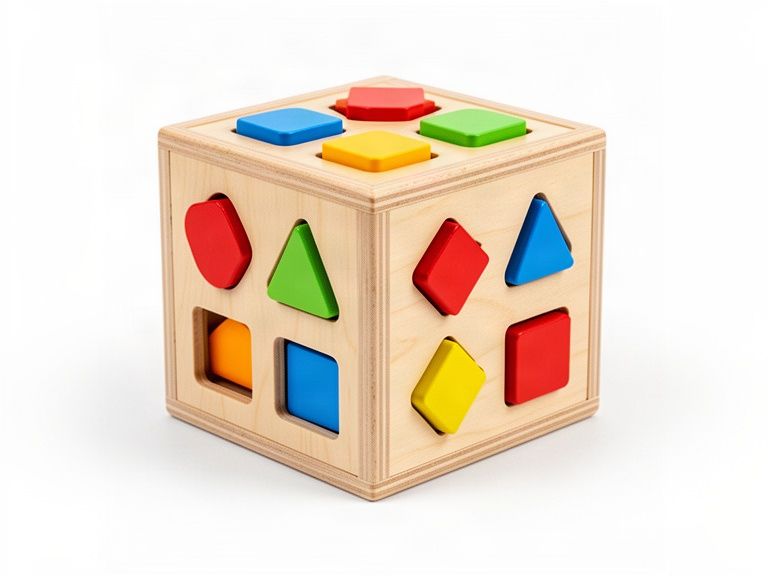
Melissa & Doug Shape Sorting Cube
Melissa & Doug
A wooden cube with shaped holes on every side and chunky blocks to match, with a lid that opens to get them back out.
Good for: Classic shape play that lasts for years
- Durable wood that holds up to years of use
- Blocks come in many shapes and colors
- Lid opens so toddlers can retrieve the pieces
- Quiet, screen-free play
- Some shapes are tricky for younger toddlers
- Wood can chip if thrown on hard floors
The wooden shape sorter is one of those toys that never really needed reinventing, and the Melissa & Doug cube is a long-running version of it. Each face of the cube has a set of shaped holes, and the chunky wooden blocks only fit through their matching openings. When the cube is full, the lid flips open and the game starts again.
Younger toddlers usually begin with the easy shapes — a circle, a square — and work up to the trickier ones over months. That built-in difficulty curve is part of why sorters stay on the shelf for so long.
It's quiet, needs no batteries and is sturdy enough to hand down. Watch for chips on the corners after heavy use.
The short version: A timeless wooden shape sorter that grows in difficulty with your toddler.
AI picture- TypePounding bench with xylophone
- MaterialWood
- BatteriesNone
#4Best cause-and-effect toy8.6/10
Hape Pound & Tap Bench with Slide-Out Xylophone
Hape
A wooden pounding bench where balls drop through holes and roll across a xylophone, which also slides out to play alone.
Good for: Young toddlers who love to bang things
- Very clear cause and effect: pound the ball, hear the notes
- Xylophone slides out for separate music play
- Solid wood construction
- Good fit for younger toddlers
- Noisy by design
- Balls roll away and need tracking down
Toddlers want to hit things, and the Hape Pound & Tap Bench gives them something good to hit. Colored balls sit in holes on top; a whack with the mallet sends each one down and across a row of xylophone keys, playing notes as it rolls out the bottom.
That chain of events — hit, drop, roll, sound — is about as satisfying as cause and effect gets for a young toddler. The xylophone also slides out so it can be played with the mallet on its own, which stretches the toy's life.
Expect noise, and expect balls under the couch. It's a sturdy wooden toy that tends to get passed between siblings.
The short version: A cheerful, durable cause-and-effect toy with a built-in instrument.
AI picture- TypeInteractive plush
- MaterialPlush with electronic paws and tummy
- BatteriesYes
#5Best for younger toddlers8.2/10
Fisher-Price Laugh & Learn Smart Stages Puppy
Fisher-Price
A soft, interactive puppy that sings and talks about body parts, colors and numbers, with settings that change as a child grows.
Good for: Babies moving into the toddler years
- Soft and huggable, unlike most electronic toys
- Smart Stages settings change the content as a child grows
- Simple press-to-play paws and tummy
- Long-running, widely available toy
- Can't be machine-washed because of the electronics
- Repetitive songs
- Older toddlers may lose interest
The Laugh & Learn Puppy is a soft toy first and an electronic toy second, which suits children at the young end of the toddler years. Pressing its paws or tummy plays songs and phrases about body parts, colors, counting and greetings.
Fisher-Price's Smart Stages switch adjusts what the puppy says, so the same toy offers simpler content for a baby and a little more for a young toddler. That makes it a good bridge toy that stays relevant for longer than a single-mode plush.
The electronics mean it can only be surface-cleaned, and some parents find the songs wear thin. Toddlers closer to three usually move on to more hands-on toys.
The short version: A cuddly, adjustable first electronic toy for babies heading into toddlerhood.
Compare at a glance
| Pick | Type | Material | Batteries | Score |
|---|---|---|---|---|
| #1 Learning Resources Spike the Fine Motor Hedgehog | Peg and color-sorting toy | Plastic | None | 9.1 |
| #2 LeapFrog Learning Friends 100 Words Book | Talking picture book | Plastic with thick pages | Yes (AA) | 8.9 |
| #3 Melissa & Doug Shape Sorting Cube | Shape sorter | Wood | None | 8.7 |
| #4 Hape Pound & Tap Bench with Slide-Out Xylophone | Pounding bench with xylophone | Wood | None | 8.6 |
| #5 Fisher-Price Laugh & Learn Smart Stages Puppy | Interactive plush | Plush with electronic paws and tummy | Yes | 8.2 |
Specs come from manufacturer listings when we wrote this guide and can change between production runs.
Buying tips
What toddler learning toys actually do
Most good toddler toys target one of a few things:
- Hand skills. Pegs, shape sorters and stacking toys ask small fingers to grip, turn and place.
- Cause and effect. Pound a ball and it rolls; press a button and something happens.
- Words and sounds. Talking books and interactive toys name pictures, animals and colors aloud.
- Sorting and matching. Colors, sizes and shapes, the building blocks of later puzzles.
A balanced toy shelf has a little of each. You don't need many toys — a handful rotated every week or two often gets more play than a full bin.
Electronic or not?
Electronic toys are good at naming things and holding attention, and many toddlers love them. Their downside is that the toy does most of the talking. Simple wooden and plastic toys ask the child to do the work and tend to last for years. A mix is reasonable; if you buy electronic, look for a volume switch and an off switch, and check that the battery compartment closes with a screw.
Match the toy to the stage
- Around 12–18 months: cause-and-effect toys, pounding benches, chunky board-style books and big, easy shapes.
- Around 18–24 months: shape sorters, peg toys, simple talking books and stacking.
- Around 2–3 years: more shapes and colors, pretend play, simple matching games.
These are loose ranges — children move at different speeds. The age grade on the box is the maker's guidance and also reflects small-part rules, so stay within it.
Safety and care
Toddlers mouth everything. Choose toys with no small detachable parts, check regularly for cracks or loose pieces, and remove anything that starts to break. Look up product recalls on the CPSC website if you're buying secondhand. Wipe plastic toys with mild soap and water; wipe wooden toys with a barely damp cloth rather than soaking them.
What to skip
Skip toys that promise to make a toddler "smarter" or claim specific academic results — no toy can back that up. Also skip toys with dozens of modes and lights that a toddler can't control; a toy they can understand on their own beats a flashier one they can only watch.
FAQ
QHow many learning toys does a toddler need?
Fewer than most people think. A handful of toys covering hand skills, cause and effect, words and sorting is plenty. Rotating a few out of sight and bringing them back later keeps them interesting.
QAre electronic toys bad for toddlers?
Not inherently. Talking books and interactive toys can be fun ways to hear words and songs. The main drawback is that the toy does much of the work, so balance them with simple toys and plenty of talking with a grown-up.
QAre wooden toys better than plastic ones?
Each has strengths. Wooden toys are durable and quiet; plastic toys are lighter, often cheaper and easier to wash. Build quality and age-appropriate design matter more than material.
QWhen can my toddler use a shape sorter?
Many toddlers start enjoying shape sorters somewhere in the second year, usually beginning with just one or two easy shapes. Follow the maker’s age grade on the box.
QHow do I clean toddler toys?
Wipe plastic toys with warm soapy water and let them air-dry. Wipe wooden toys with a lightly damp cloth and dry them right away. Keep electronics away from water and follow the maker’s care instructions.
How we picked
We compared makers' descriptions of each toy's play features, materials, power needs and stated age grades, along with build quality, ease of cleaning and how long each toy has stayed on the market. Our picks and scores are based on this research — we have not tested these products hands-on. Brands cannot pay to be included. Read our full method.
In the same aisle
More toddler learning toys to browse
A random pull from our product catalog, not ranked or reviewed.