Best Enclosed 3D Printers in 2026
Five enclosed 3D printers compared on build volume, chamber heating and materials, from the Bambu Lab P2S and Elegoo Centauri Carbon to the large Creality K2 Plus.
- 5 picks
- 5 min read
- Updated Nov 20, 2026
As an Amazon Associate I earn from qualifying purchases. If you buy through a link here we may earn a commission, at no extra cost to you. Details
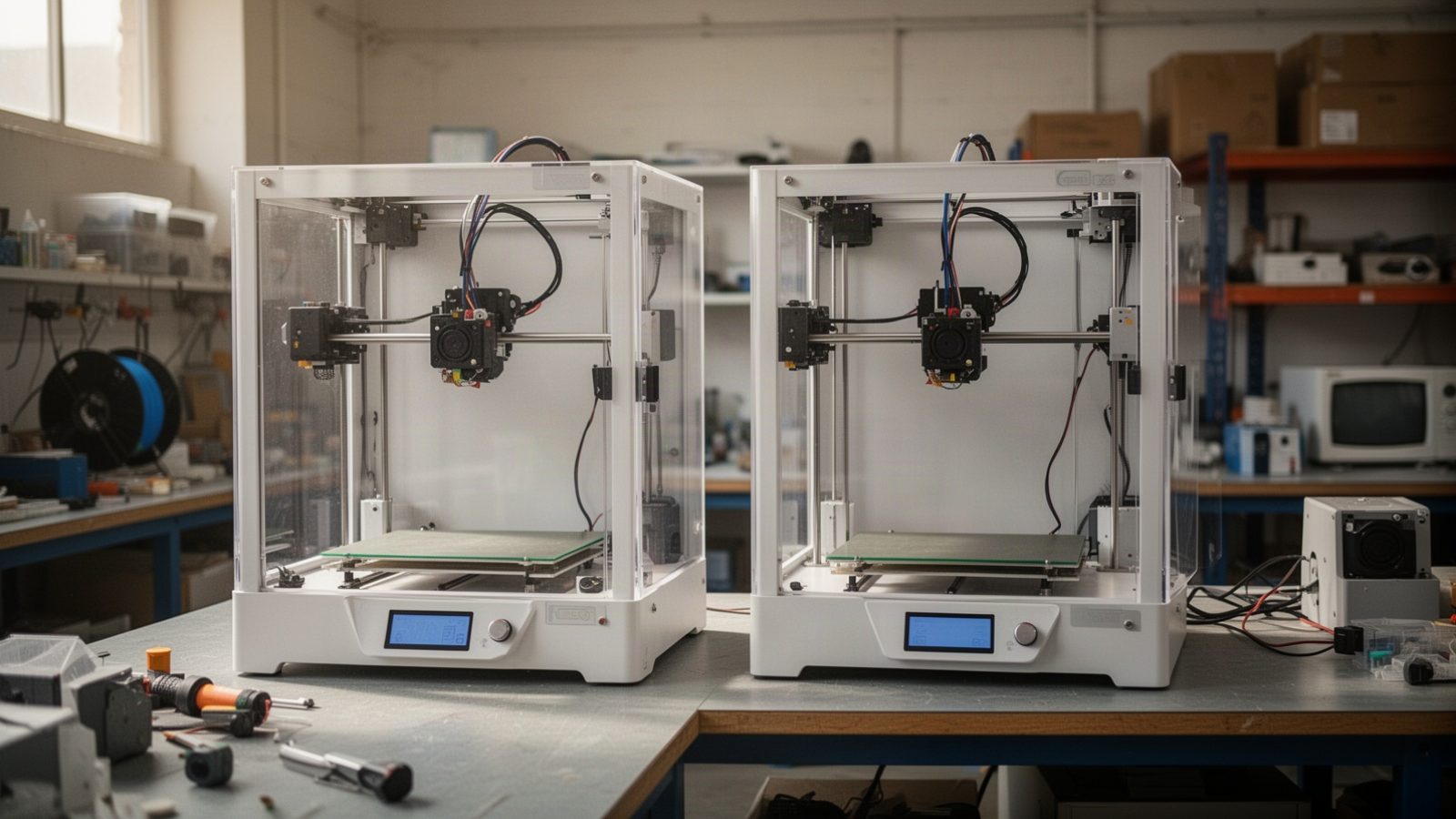
An enclosed 3D printer wraps the print area in walls, a door and a lid. That simple box makes a big difference. It holds in heat so tougher materials such as ABS, ASA and nylon do not warp or crack between layers, it blocks drafts that ruin tall prints, and it keeps hot nozzles and fast-moving parts away from children, pets and curious fingers. Many enclosed printers also filter the air and run a little quieter.
Today's enclosed printers are also fast CoreXY machines with automatic calibration, so you do not give up ease of use for the extra capability. The differences come down to build volume, whether the chamber is actively heated, how well the printer handles abrasive and engineering filaments, and how the software and upgrade options compare. We compared current models from Bambu Lab, Elegoo, Qidi, Flashforge and Creality on those points to help you choose the right enclosed printer for your projects.
The lineup
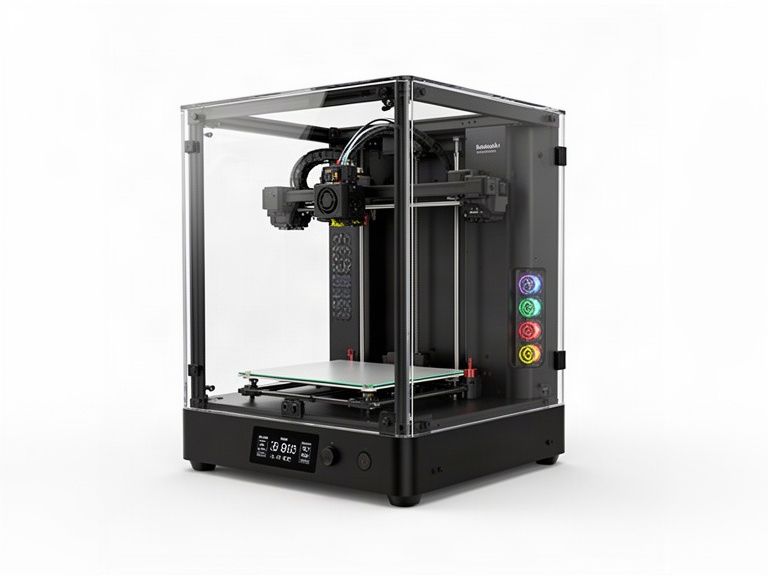 Best overall Bambu Lab P2S 3D Printer
Most people who want an enclosed printer that just works
9.3 Buy Now on Amazon
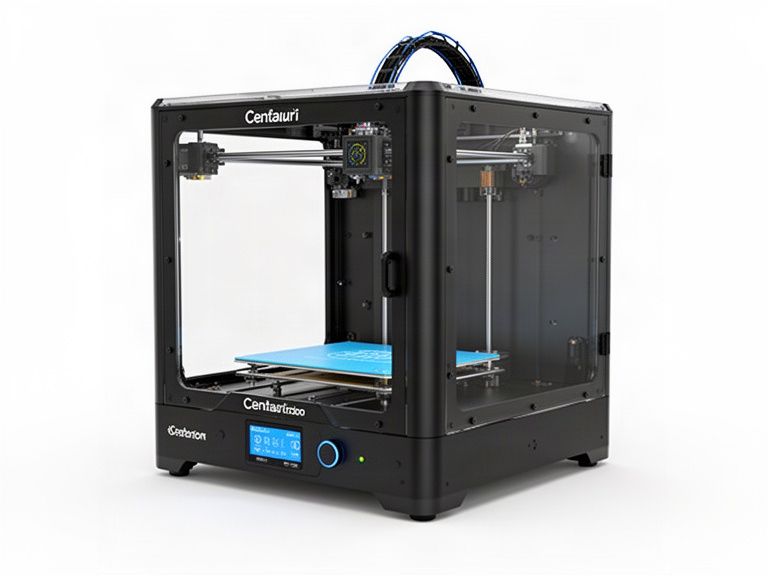 Best value Elegoo Centauri Carbon 3D Printer
Budget-conscious buyers who want an enclosure and tougher materials
8.9 Buy Now on Amazon
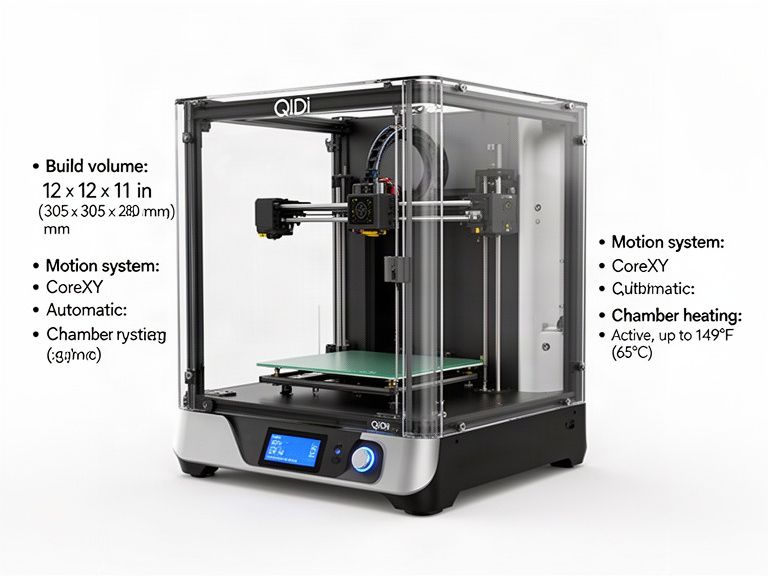 Best for engineering filaments Qidi Plus4 3D Printer
Makers printing ABS, nylon and polycarbonate parts
8.8 Buy Now on Amazon
 Best compact Flashforge Adventurer 5M Pro 3D Printer
Small spaces, classrooms and offices
8.5 Buy Now on Amazon
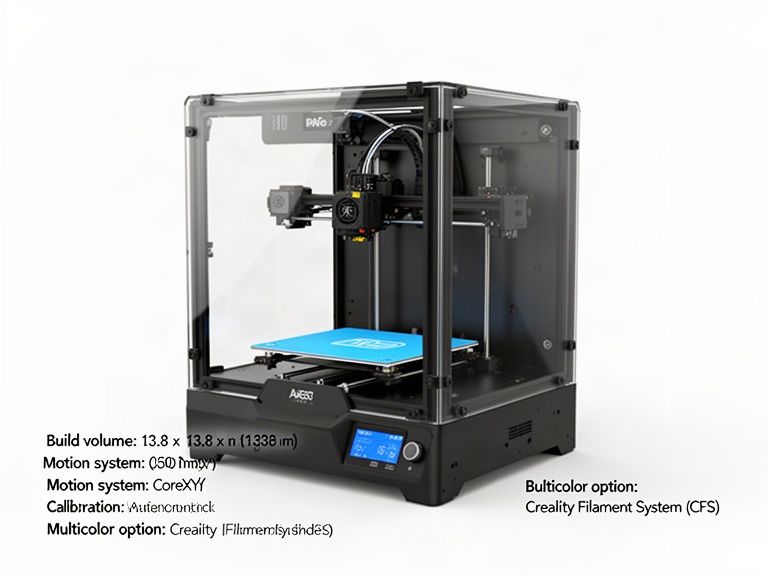 Best large-format Creality K2 Plus 3D Printer
Big props, helmets and batch printing
8.7 Buy Now on Amazon
AI picture
- Build volume10.1 x 10.1 x 10.1 in (256 mm cube)
- Motion systemCoreXY
- CalibrationAutomatic
- Multicolor optionBambu Lab AMS
#1Best overall9.3/10
Bambu Lab P2S 3D Printer
Bambu Lab · Model P2S
The successor to the popular P1S, adding a touchscreen, a quick-swap nozzle and improved airflow control.
Good for: Most people who want an enclosed printer that just works
- Polished software, app and model library
- Touchscreen and quick-swap nozzle
- Improved airflow control for PLA and ABS alike
- Upgradable to multicolor printing with Bambu's AMS
- No actively heated chamber
- Tied closely to Bambu Lab's software ecosystem
Bambu Lab's P1S became one of the most popular enclosed printers by combining an enclosure with the brand's polished, self-calibrating experience. The P2S, released in late 2025, refreshes that formula with a touchscreen, a quick-swap nozzle and better control over airflow, so it can keep the chamber cool for PLA or warm for ABS and ASA.
The 10.1-inch build volume suits nearly all home projects, and Bambu's slicer, app and online model library remain the easiest software to live with. It works with Bambu's AMS units if you later want multicolor printing.
It does not actively heat the chamber, so nylon and polycarbonate are better suited to printers built for them. For most people moving beyond PLA, it is the most complete package.
The short version: The most well-rounded enclosed printer for home makers moving beyond PLA.
AI picture- Build volume10.1 x 10.1 x 10.1 in (256 mm cube)
- Motion systemCoreXY
- CalibrationAutomatic
- NozzleHardened steel
#2Best value8.9/10
Elegoo Centauri Carbon 3D Printer
Elegoo
A budget-friendly enclosed CoreXY printer with a hardened nozzle and a 10-inch build volume.
Good for: Budget-conscious buyers who want an enclosure and tougher materials
- Enclosed CoreXY at a budget-friendly price
- Handles carbon-fiber-filled filaments
- Comes largely assembled
- Same build volume as pricier rivals
- Software and app are less mature than Bambu Lab's
- Passive chamber only
- Fewer upgrade options
Elegoo's Centauri Carbon is the value pick among enclosed printers. It offers a 10.1-inch build volume, CoreXY motion and automatic calibration in an enclosed body at a price closer to open-frame printers.
The name hints at its other strength: a hardened nozzle that handles abrasive carbon-fiber-filled filaments as well as PLA, PETG, ABS and ASA. That makes it good for stiff, functional parts such as drone frames, brackets and jigs.
Its software and app are younger than Bambu Lab's, and the chamber is heated only by the bed. For a first enclosed printer or a second machine for tougher filaments, it is very good value.
The short version: An enclosed CoreXY printer that delivers most of what pricier rivals do for much less.
AI picture- Build volume12 x 12 x 11 in (305 x 305 x 280 mm)
- Motion systemCoreXY
- CalibrationAutomatic
- Chamber heatingActive, up to 149°F (65°C)
#3Best for engineering filaments8.8/10
Qidi Plus4 3D Printer
Qidi Tech · Model Plus4
An enclosed CoreXY printer with an actively heated chamber and a 12-inch-wide build area.
Good for: Makers printing ABS, nylon and polycarbonate parts
- Actively heated chamber for engineering materials
- Larger build area than 10-inch printers
- Built for high-temperature filaments
- Good value for its capability
- Software is less polished than Bambu Lab's
- Large, heavy machine
- Heated chamber uses more power
Qidi Tech built the Plus4 for people who want to print serious engineering materials at home. Its chamber has its own heater, rated up to about 149°F, which keeps large ABS and ASA parts from warping and makes nylon and polycarbonate far more practical than on passively heated printers.
The build area is roomy at about 12 by 12 by 11 inches, and it pairs CoreXY speed with automatic calibration. It is a good fit for functional parts, enclosures and tooling that need heat or impact resistance.
It is big and heavy, and Qidi's software is less refined than Bambu Lab's. Ventilation matters even more with the materials it is designed for, so plan where the fumes will go.
The short version: The best enclosed choice if engineering filaments are a regular part of your work.
AI picture- Build volume8.7 x 8.7 x 8.7 in (220 mm cube)
- Motion systemCoreXY
- CalibrationAutomatic leveling
- ExtrasAir filtration, camera
#4Best compact8.5/10
Flashforge Adventurer 5M Pro 3D Printer
Flashforge · Model Adventurer 5M Pro
A compact enclosed CoreXY printer with automatic leveling, a quick-change nozzle and built-in air filtration.
Good for: Small spaces, classrooms and offices
- Compact, tidy footprint
- Built-in air filtration and camera
- Quick-change nozzle
- Well suited to shared spaces
- Smaller build volume than most rivals
- No heated chamber
- No multicolor upgrade on this model
Flashforge's Adventurer 5M Pro takes the fast, compact 5M and wraps it in a full enclosure, adding air filtration and a camera for remote monitoring. The result is a tidy, cube-shaped printer that fits on a desk in an office, classroom or small apartment.
Its 8.7-inch build volume is smaller than the 10-inch printers here, but it is enough for most household parts, school projects and prototypes. Automatic leveling and a quick-change nozzle keep maintenance simple.
The chamber is not actively heated, and there is no multicolor add-on. If you need a bigger build or engineering materials, look at the Qidi or Bambu Lab picks.
The short version: A neat, compact enclosed printer for shared and small spaces.
AI picture- Build volume13.8 x 13.8 x 13.8 in (350 mm cube)
- Motion systemCoreXY
- CalibrationAutomatic
- Multicolor optionCreality Filament System (CFS)
#5Best large-format8.7/10
Creality K2 Plus 3D Printer
Creality · Model K2 Plus
A large enclosed CoreXY printer with a 13.8-inch cube build volume and optional multicolor system.
Good for: Big props, helmets and batch printing
- Very large build volume
- Prints big parts in one piece
- Optional multicolor system
- Enclosure helps with ABS and ASA
- Takes up a lot of space
- Premium-priced
- Creality's software is less polished than Bambu Lab's
If you print cosplay helmets, large props or several parts at once, Creality's K2 Plus offers a 350 mm cube build volume, about 13.8 inches on each side, in an enclosed CoreXY frame. That means fewer split models and less gluing and sanding.
It pairs that size with automatic calibration and the option to add Creality's Filament System for multicolor printing. The enclosure helps large ABS and ASA prints, which are especially prone to warping at this size.
The K2 Plus is a big, heavy machine that needs a sturdy table and plenty of space, and it is premium-priced. Creality's software has improved, but it is still less seamless than Bambu Lab's.
The short version: The enclosed printer to choose when build size is your top priority.
Compare at a glance
| Pick | Build volume | Motion system | Calibration | Multicolor option | Score |
|---|---|---|---|---|---|
| #1 Bambu Lab P2S 3D Printer | 10.1 x 10.1 x 10.1 in (256 mm cube) | CoreXY | Automatic | Bambu Lab AMS | 9.3 |
| #2 Elegoo Centauri Carbon 3D Printer | 10.1 x 10.1 x 10.1 in (256 mm cube) | CoreXY | Automatic | — | 8.9 |
| #3 Qidi Plus4 3D Printer | 12 x 12 x 11 in (305 x 305 x 280 mm) | CoreXY | Automatic | — | 8.8 |
| #4 Flashforge Adventurer 5M Pro 3D Printer | 8.7 x 8.7 x 8.7 in (220 mm cube) | CoreXY | Automatic leveling | — | 8.5 |
| #5 Creality K2 Plus 3D Printer | 13.8 x 13.8 x 13.8 in (350 mm cube) | CoreXY | Automatic | Creality Filament System (CFS) | 8.7 |
Specs come from manufacturer listings when we wrote this guide and can change between production runs.
Buying tips
Why choose an enclosed printer?
- Materials: ABS, ASA, PC and nylon shrink as they cool. A warm, draft-free chamber cuts warping and layer splitting.
- Reliability: even PLA and PETG prints benefit from steady temperatures in a drafty garage or near an air vent.
- Safety around the home: doors and lids keep hands and paws away from hot and moving parts.
- Noise and dust: an enclosure dampens fan noise a little and keeps dust off the build plate.
If you print only PLA, you may prefer to leave the door or lid open, since PLA likes cooler air. Most enclosed printers allow this.
Passive or actively heated chamber?
Most enclosed printers warm the chamber passively, using heat from the bed. That is enough for ABS and ASA in many cases. Printers with an actively heated chamber add a heater and fan to reach and hold higher temperatures, which helps with large ABS parts, nylon and polycarbonate. They cost more and use more power, so pay for active heating only if you plan to print engineering materials regularly.
Filtration and ventilation
ABS, ASA and some other filaments release fumes and ultrafine particles while printing. Built-in carbon or HEPA filters can reduce odors, but they do not replace good ventilation. Print these materials in a well-ventilated space away from bedrooms and living areas, consider venting the printer outdoors, and follow the filament maker's safety data sheet.
Build volume and footprint
A 10-inch cube is the sweet spot for most home users. Larger printers in the 13- to 14-inch range handle helmets, big enclosures and batch production, but they need a sturdy table and plenty of room. Remember that the enclosure itself adds height and width, and you need clearance to open the door and lid.
Think about where the printer will live, too. A garage or workshop is ideal for ABS and ASA because fumes and noise stay out of living spaces, but very cold rooms make it harder for a passive chamber to warm up. A spare room with a window you can open is a good compromise.
Hardware for tougher filaments
Carbon-fiber and glass-fiber blends wear out brass nozzles quickly, so look for a hardened steel nozzle. A bed that runs hot, around 230°F (110°C) or more, and a nozzle that reaches about 570°F (300°C) open up most engineering materials. Check the manufacturer's material list before buying specialty filament.
What to skip
Avoid paying extra for features you will not use. Lidar, cameras and smart sensors are helpful, but build volume, reliability and software support matter more day to day.
FAQ
QDo I need an enclosed printer to print ABS?
It is strongly recommended. ABS shrinks as it cools, and without an enclosure large parts often warp or crack. An enclosure also helps contain fumes so a filter or vent can deal with them.
QCan I print PLA in an enclosed printer?
Yes. Many owners print PLA with the door or lid open, or follow the manufacturer’s recommended settings, because PLA prefers cooler air and can clog if the chamber gets too warm.
QDo built-in filters make ABS fumes safe?
Filters can reduce odors and some particles, but they are not a guarantee. Print ABS and ASA in a well-ventilated space, keep the printer out of bedrooms and follow the filament maker’s safety data sheet.
QWhat is an actively heated chamber?
A dedicated heater and fan that warm the inside of the printer to a set temperature, rather than relying on heat from the bed. It improves results with large ABS parts and engineering materials such as nylon and polycarbonate.
QAre enclosed printers quieter?
Usually a little, because the walls dampen fan and motor noise. Fast CoreXY printers still make noticeable noise, so do not expect silence.
How we picked
We compared manufacturer specifications for build volume, motion system, calibration, chamber heating, filtration, supported materials, nozzle hardware and multicolor upgrade options for enclosed FDM printers that are widely available to US shoppers in 2025 and 2026. Our picks and scores are based on this research — we have not tested these products hands-on. Brands cannot pay to be included. Read our full method.
In the same aisle
More enclosed 3d printers to browse
A random pull from our product catalog, not ranked or reviewed.